

Nude Yoga
The Naked Fit Club guide to nude yoga, mindful movement, body awareness and whole-body wellness.
What’s on This Page
This guide explores nude yoga from the basics to building your own practice. Jump to a section below, or keep scrolling for the complete guide.
- What Is Nude Yoga?
- Why Practice Nude Yoga?
- Benefits of Nude Yoga
- Nude Yoga for Beginners
- Practicing Nude Yoga at Home
- Nude Yoga Poses & Movement
- Body Awareness & Confidence
- Mindfulness, Meditation & Breathwork
- Nude Yoga for Couples
- Is Nude Yoga Sexual?
- Nude Yoga Classes & Community
- Safety, Privacy & Hygiene
- Getting Started With Nude Yoga
UPDATED: 09/22/2026
Intro to Nude Yoga
Nude yoga is obviously the practice of yoga without clothing. Also commonly called naked yoga, it combines familiar yoga poses, breathing, stretching, balance, and mindful movement with the direct physical experience of practicing without clothes.
At first, the idea can sound simple: take off your clothes and do yoga.
But for many people, the experience becomes more meaningful than that.
Without clothing, you may become more aware of posture, breathing, balance, muscle engagement, tension, alignment, and the way your body actually moves through each pose. You may also become more conscious of how you feel about your body when there is nothing to cover, shape, compress, or distract from it.
For some people, nude yoga is primarily a mindfulness practice. For others, it is about comfort, body confidence, flexibility, self-acceptance, relaxation, intimacy, or simply experiencing a familiar form of movement differently.
There is no single reason to practice nude yoga and no particular body type, age, flexibility level, or fitness background required to explore it.
At Naked Fit Club, we view nude yoga as one expression of a broader approach to fitness and well-being: moving with greater awareness, becoming more comfortable in your body, and paying closer attention to how your body feels rather than only how it looks.
What Is Nude Yoga?
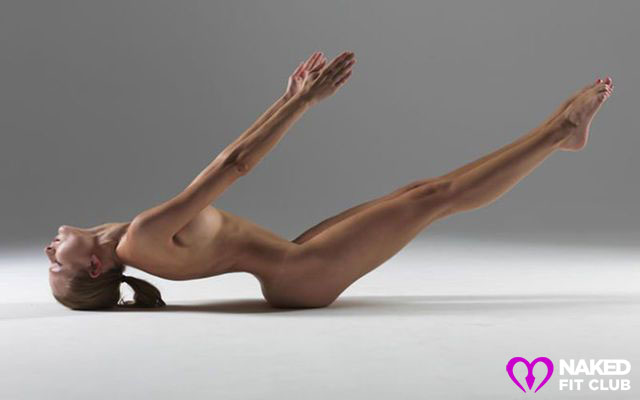
Nude yoga is yoga practiced partially or completely without clothing.
The terms nude yoga and naked yoga are generally used to describe the same practice. Some people prefer one term over the other, but both refer to practicing yoga without the clothing normally worn during a yoga session.
The poses, breathing techniques, stretches, balance work, and movement patterns are generally the same as those practiced in clothed yoga. What changes is the experience of performing them without clothing.
Removing clothing can make certain physical sensations more noticeable. You may feel how your skin and muscles move during a twist, notice where muscles engage during a standing pose, become more aware of your breathing, or observe alignment and posture more clearly.
Nude yoga can be practiced privately at home, with a partner, or in appropriate adult clothing-optional classes and communities.
Some people practice completely nude. Others prefer to remain partially clothed, particularly when they are first becoming comfortable with the experience.
The amount of clothing is less important than the intention behind the practice.
Nude yoga is not about performing nudity. It is about experiencing movement, breathing, balance, flexibility, and awareness with fewer physical and psychological layers between you and your body.
How Nude Yoga Fits Into Naked Fitness
Nude yoga is one of the most natural forms of naked fitness because yoga already emphasizes many of the same ideas that are central to clothing-optional movement.
Both encourage greater attention to breathing, posture, balance, physical sensation, mobility, and the relationship between the mind and body.
Naked fitness can include many different forms of movement, including strength training, mobility work, stretching, bodyweight exercise, breathwork, meditation, and other physical practices.
Nude yoga occupies an important place within that larger approach because it brings movement and awareness together so directly.
A yoga practice can be physically challenging, deeply restorative, meditative, playful, or a combination of all of those things.
Removing clothing can add another layer of awareness by making the body more visible and physically unobstructed.
For that reason, nude yoga is not separate from the broader Naked Fit Club philosophy. It is one of the clearest examples of what can happen when movement shifts away from appearance and toward awareness.
Why Practice Yoga Nude?
People practice nude yoga for many different reasons.
Some enjoy the physical freedom of moving without clothing. Waistbands, straps, seams, tight fabrics, and shifting garments can become noticeable during yoga, particularly in twists, folds, stretches, and inversions.
Others are interested in body awareness.
Without clothing, it may become easier to observe posture, alignment, muscle engagement, balance, and range of motion.
Some people use nude yoga as an opportunity to become more comfortable with their bodies. Practicing in a setting where the body is moving, stretching, balancing, and breathing can create a very different experience from simply looking at the body in a mirror.
For others, the appeal is mindfulness. Removing clothing can make the practice feel more immediate and sensory, drawing attention toward breathing, temperature, pressure, movement, and physical sensation.
And sometimes the reason is simpler.
Practicing yoga naked can feel freeing, natural, relaxing, playful, or simply different enough to make a familiar yoga practice feel new again.
A Brief History of Nude Yoga
The relationship between nudity, spiritual practice, movement, and contemplation is much older than the modern wellness industry.
Various ascetic and spiritual traditions throughout history have used nudity as a symbol of simplicity, renunciation, freedom from material attachment, or a more direct relationship with the physical body.
Modern nude yoga, however, has developed in many different forms and should not be treated as one continuous tradition with a single origin.
In contemporary settings, naked yoga has appeared within naturist communities, private yoga groups, body-positive spaces, wellness communities, and individual home practices.
For many modern practitioners, the focus is less about religious asceticism and more about mindfulness, body awareness, comfort with nudity, self-acceptance, and freedom of movement.
That diversity is important because nude yoga does not belong to only one community or one interpretation.
It can be approached spiritually, physically, psychologically, socially, or simply as another way to practice yoga.
The Benefits of Nude Yoga
The potential benefits of nude yoga often overlap with the benefits associated with yoga generally, while adding the unique experience of practicing without clothing.
Physically, yoga can support flexibility, balance, mobility, coordination, strength, and greater awareness of movement.
Practicing yoga nude may make it easier to notice certain aspects of posture, alignment, muscle engagement, breathing, and range of motion.
There can also be a psychological dimension to the practice.
Instead of viewing the body only from the perspective of appearance, nude yoga gives you an opportunity to experience what the body can do: balance, stretch, stabilize, breathe, relax, support weight, and move through space.
That shift may support greater body familiarity, confidence, neutrality, or self-acceptance for some people.
Nude yoga can also become a mindfulness practice. Paying attention to breathing, tension, contact with the floor, temperature, balance, and physical sensation can make the practice feel more present and less automatic.
Individual experiences vary, and nude yoga should not be treated as a medical or psychological treatment. The value of the practice comes from what you personally experience through movement, awareness, and becoming more comfortable in your own body.
Nude Yoga for Beginners
You do not need to be experienced at yoga or completely comfortable with nudity before trying nude yoga.
In fact, many beginners are exploring both things at the same time.
The easiest way to begin is usually in a private space where you feel physically and emotionally comfortable.
You might start with a short practice rather than a full yoga session. A few gentle stretches, breathing exercises, seated movements, or familiar poses can help you become accustomed to moving without clothing.
You can also begin partially clothed.
There is no benefit in forcing yourself to remove more clothing than feels comfortable. Your naked yoga practice can develop gradually as your familiarity increases.
Beginners should also choose poses they already understand or movements that feel simple and controlled. Practicing without clothing does not change the basic principles of safe yoga practice.
The goal is not to prove that you can practice nude.
The goal is to create enough comfort that you can begin paying attention to the movement itself.
Creating a Nude Yoga Practice at Home
Home is an ideal place for many people to explore nude yoga because it offers privacy and control over the environment.
You do not need a dedicated yoga studio.
A quiet bedroom, living room, home gym, or other private space with enough room for a yoga mat can be sufficient.
Temperature becomes more noticeable without clothing, so choose a space that feels comfortable both before and after your body warms up.
Lighting can also affect the experience. Some people prefer bright lighting that allows them to observe alignment clearly, while others feel more relaxed with softer lighting.
Mirrors are optional.
A mirror can provide useful feedback about posture and alignment, but it can also pull attention toward appearance. If you find yourself becoming overly critical of how your body looks, practicing without a mirror may help you focus more on sensation.
A clean yoga mat, towel, water, and enough uninterrupted time to settle into the practice are often all you need.
The more ordinary the environment becomes, the easier it may be to stop thinking about the fact that you are naked and start focusing on the yoga.
Nude Yoga Poses and Movement
Most familiar yoga poses can be incorporated into a nude yoga practice as long as they are appropriate for your experience, mobility, and physical abilities.
Standing poses can help you notice balance, posture, and weight distribution.
Seated poses and gentle forward folds can encourage slower breathing and greater awareness of tension.
Twists may make the movement of the torso and spine more noticeable without clothing.
Balance poses can draw attention toward the feet, core, breathing, and the subtle adjustments the body makes to remain stable.
Restorative poses can be particularly compatible with naked yoga because they encourage relaxation and reduce the sense that every practice needs to be physically demanding.
You do not need complicated or visually impressive poses for nude yoga to be meaningful.
Simple movements performed with attention can often reveal more about the body than advanced poses performed without awareness.
Nude Yoga and Body Awareness
Body awareness is one of the central reasons nude yoga can feel different from a conventional clothed practice.
Without clothing, the movement of the body is easier to see and sometimes easier to feel.
You may notice the position of your hips during a standing pose, the movement of your rib cage while breathing, tension in your shoulders, the way your weight shifts through your feet, or differences between one side of your body and the other.
This can help turn yoga into a more observational practice.
The goal is not to search for flaws.
It is to become more familiar with the physical signals your body is already providing.
Body awareness also includes noticing fatigue, discomfort, stability, ease, breathing, and range of motion.
Learning to recognize those signals can help you approach movement with greater attention and respect for your own limits.
Nude Yoga, Body Confidence and Self-Acceptance
Nude yoga is often associated with body confidence, but confidence does not need to come first.
Many people feel uncomfortable seeing their bodies without clothing, particularly when they have spent years comparing themselves to idealized images or focusing on perceived imperfections.
Practicing yoga naked can provide another context in which to experience the body.
Instead of simply standing in front of a mirror, you are watching or feeling the body stretch, balance, breathe, stabilize, and move.
The body becomes active rather than purely visual.
Over time, repeated exposure to your own body in a nonjudgmental setting may make nudity feel more familiar and less emotionally charged.
That does not mean you need to reach a point where you love every part of your appearance.
Body neutrality can be just as meaningful.
Being able to look at your body and think, “This is my body, and this is how it moves,” can represent a very different relationship from constant criticism or comparison.
Mindfulness, Meditation and Breathwork in Nude Yoga
Yoga has always involved more than physical poses, and nude yoga can provide an especially direct setting for mindful attention.
Breathing is one of the simplest places to begin.
During a pose or stretch, notice where the breath moves. Feel the rib cage expand. Notice whether you are breathing freely or holding your breath during effort.
Mindfulness can also involve noticing temperature, pressure, balance, muscle tension, contact with the mat, and the subtle sensations that appear when the body becomes still.
You do not need to turn every nude yoga practice into formal meditation.
Sometimes simply pausing for several breaths between movements is enough to shift your attention back toward the present moment.
For people who enjoy meditation, the end of a naked yoga practice can also provide a natural transition into seated or lying stillness.
The body has already been moving and breathing. Meditation simply allows the attention to remain there a little longer.

Nude Yoga for Couples
Nude yoga can also be explored with a partner.
A shared practice can create opportunities for trust, communication, humor, vulnerability, and physical connection.
Couples might practice individual poses beside one another, move through the same sequence, help each other with gentle stretching, or simply share the experience of practicing without clothing in the same space.
The practice does not need to be sexual.
In fact, one of the interesting aspects of practicing naked with a partner can be experiencing nudity in a context focused on movement, breathing, balance, and awareness rather than sexual expectation.
For some couples, that may contribute to greater comfort with intimacy because nudity becomes associated with trust, presence, and communication rather than performance.
Consent and boundaries remain essential.
Both people should feel free to wear clothing, modify the practice, stop, or participate differently at any time.
Is Nude Yoga Sexual?
Nude yoga is not inherently sexual.
Nudity and sexuality can overlap, but nudity also exists in many nonsexual parts of life, including bathing, changing clothes, sleeping, medical care, saunas, naturist environments, and private time at home.
Within nude yoga, nudity exists primarily in the context of movement, mindfulness, body awareness, and personal comfort.
Some people may experience increased feelings of intimacy or sensual awareness while practicing, particularly with a partner. That does not mean sexuality is the purpose of the practice.
At Naked Fit Club, nude yoga is approached as an adult fitness, wellness, mindfulness, and body-awareness practice.
The distinction comes down largely to context and intention.
Nude Yoga Classes and Community
Some people eventually become interested in practicing nude yoga with others.
Nude and clothing-optional yoga classes can offer a very different experience from practicing privately at home.
For many participants, one of the most interesting aspects of group practice is how quickly nudity can begin to feel ordinary when everyone is focused on yoga.
A reputable nude yoga environment should establish clear expectations around consent, privacy, appropriate behavior, photography, personal space, and the purpose of the class.
Participants should never feel pressured to interact physically with others or participate in ways that make them uncomfortable.
It is also reasonable to ask questions before attending.
Find out whether the class is fully nude or clothing-optional, whether beginners are welcome, what equipment is provided, what the photography policy is, and what expectations exist around towels, hygiene, and personal boundaries.
A well-run class should make those expectations easy to understand.
Nude Yoga Safety, Privacy and Hygiene
Nude yoga follows the same fundamental safety principles as other forms of yoga.
Choose poses appropriate for your abilities, avoid forcing your body into uncomfortable positions, and modify or stop movements that cause pain.
A non-slip yoga mat is particularly important because traction and stability matter regardless of whether you are wearing clothing.
Hygiene becomes more important when bare skin contacts mats, floors, cushions, or shared equipment. Use a clean personal mat or towel whenever possible and clean surfaces appropriately after use.
Temperature should also be considered. Without clothing, you may cool down more quickly during slower practices or after completing a session.
Privacy matters as well.
When practicing at home, make sure your environment protects your privacy. When practicing in a class or group, understand the rules around phones, cameras, changing areas, and personal boundaries before participating.
If you have an injury, medical condition, mobility concern, or uncertainty about whether a particular yoga practice is appropriate for you, consult a qualified healthcare or fitness professional.
Getting Started With Nude Yoga
The easiest way to begin nude yoga is to remove as much pressure from the experience as possible.
Choose a private, comfortable space. Place a clean yoga mat on the floor. Adjust the temperature. Remove as much or as little clothing as feels comfortable.
Then begin with movements you already understand.
Take several slow breaths. Stretch your shoulders. Move gently through your spine. Try a comfortable standing pose. Sit or lie on the mat and notice how your body feels.
Your first practice does not need to be long or impressive.
Five or ten minutes is enough to notice whether practicing without clothing changes your relationship with movement, breathing, or your own body.
If you are completely new to the practice, our Nude Yoga for Beginners guide walks through how to prepare, what to expect, beginner-friendly poses, comfort and privacy considerations, and how to build your first practice gradually.
From there, you can explore longer sessions, different yoga styles, mindfulness and breathing practices, partner yoga, or simply continue using nude yoga as a quiet way to reconnect with your body.
There is no required progression.
The practice can remain simple if simple is what works for you.
A Nude Yoga Perspective From Naked Fit Club
At Naked Fit Club, we do not view nude yoga as a performance or a test of how confident someone feels about their body.
We see it as an opportunity to remove some of the layers that can distract us from what movement actually feels like.
Clothing can be practical, expressive, protective, and enjoyable. But it can also become part of the way we shape, hide, compare, and evaluate our bodies.
Practicing without it occasionally can create a different kind of experience.
You may notice things you had overlooked. You may feel awkward at first. You may laugh. You may become more aware of your breathing, posture, strength, tension, flexibility, or vulnerability.
You may also discover that being naked eventually becomes the least interesting part of the practice.
That is often where nude yoga becomes most useful.
The focus shifts away from nudity itself and toward movement, awareness, comfort, and the experience of simply being present in your body.
That is the kind of practice Naked Fit Club is interested in: less judgment, more awareness, and a more natural relationship with the body you already have.
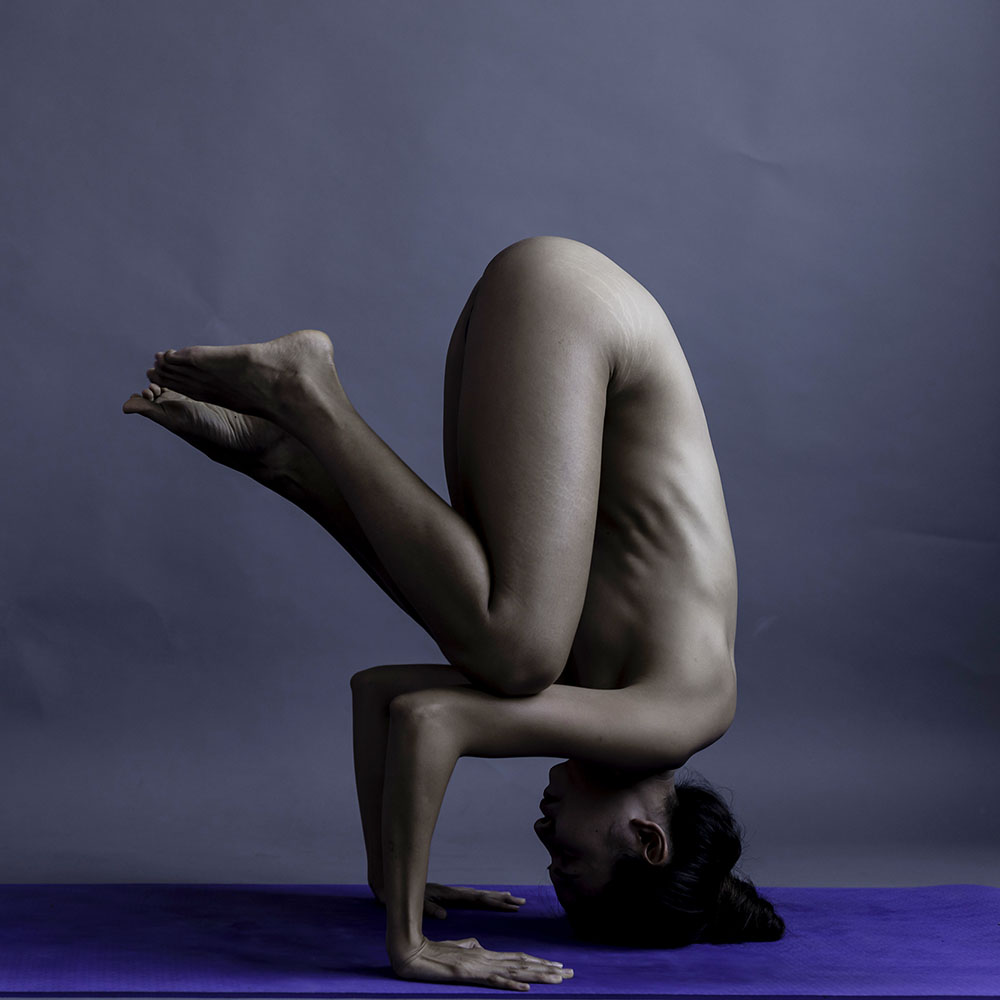
UPDATED: 09/22/2026
Nude Yoga
The Naked Fit Club guide to nude yoga, mindful movement, body awareness and whole-body wellness.
What’s on This Page
This guide explores nude yoga from the basics to building your own practice. Jump to a section below, or keep scrolling for the complete guide.
- Intro to Naked Yoga
- What Is Nude or Naked Yoga?
- Why Practice Nude Yoga?
- Benefits of Nude Yoga
- Nude Yoga for Beginners
- Practicing Nude Yoga at Home
- Nude Yoga Poses & Movement
- Body Awareness & Confidence
- Mindfulness, Meditation & Breathwork
- Nude Yoga for Couples
- Is Nude Yoga Sexual?
- Nude Yoga Classes & Community
- Safety, Privacy & Hygiene
- Getting Started With Nude Yoga
Intro to Nude Yoga
Nude yoga is obviously the practice of yoga without clothing. Also commonly called naked yoga, it combines familiar yoga poses, breathing, stretching, balance, and mindful movement with the direct physical experience of practicing without clothes.
At first, the idea can sound simple: take off your clothes and do yoga.
But for many people, the experience becomes more meaningful than that.
Without clothing, you may become more aware of posture, breathing, balance, muscle engagement, tension, alignment, and the way your body actually moves through each pose. You may also become more conscious of how you feel about your body when there is nothing to cover, shape, compress, or distract from it.
For some people, nude yoga is primarily a mindfulness practice. For others, it is about comfort, body confidence, flexibility, self-acceptance, relaxation, intimacy, or simply experiencing a familiar form of movement differently.
There is no single reason to practice nude yoga and no particular body type, age, flexibility level, or fitness background required to explore it.
At Naked Fit Club, we view nude yoga as one expression of a broader approach to fitness and well-being: moving with greater awareness, becoming more comfortable in your body, and paying closer attention to how your body feels rather than only how it looks.
What Is Nude Yoga?
Nude yoga is yoga practiced partially or completely without clothing.
The terms nude yoga and naked yoga are generally used to describe the same practice. Some people prefer one term over the other, but both refer to practicing yoga without the clothing normally worn during a yoga session.
The poses, breathing techniques, stretches, balance work, and movement patterns are generally the same as those practiced in clothed yoga. What changes is the experience of performing them without clothing.
Removing clothing can make certain physical sensations more noticeable. You may feel how your skin and muscles move during a twist, notice where muscles engage during a standing pose, become more aware of your breathing, or observe alignment and posture more clearly.
Nude yoga can be practiced privately at home, with a partner, or in appropriate adult clothing-optional classes and communities.
Some people practice completely nude. Others prefer to remain partially clothed, particularly when they are first becoming comfortable with the experience.
The amount of clothing is less important than the intention behind the practice.
Nude yoga is not about performing nudity. It is about experiencing movement, breathing, balance, flexibility, and awareness with fewer physical and psychological layers between you and your body.
How Nude Yoga Fits Into Naked Fitness
Nude yoga is one of the most natural forms of naked fitness because yoga already emphasizes many of the same ideas that are central to clothing-optional movement.
Both encourage greater attention to breathing, posture, balance, physical sensation, mobility, and the relationship between the mind and body.
Naked fitness can include many different forms of movement, including strength training, mobility work, stretching, bodyweight exercise, breathwork, meditation, and other physical practices.
Nude yoga occupies an important place within that larger approach because it brings movement and awareness together so directly.
A yoga practice can be physically challenging, deeply restorative, meditative, playful, or a combination of all of those things.
Removing clothing can add another layer of awareness by making the body more visible and physically unobstructed.
For that reason, nude yoga is not separate from the broader Naked Fit Club philosophy. It is one of the clearest examples of what can happen when movement shifts away from appearance and toward awareness.
Why Practice Yoga Nude?
People practice nude yoga for many different reasons.
Some enjoy the physical freedom of moving without clothing. Waistbands, straps, seams, tight fabrics, and shifting garments can become noticeable during yoga, particularly in twists, folds, stretches, and inversions.
Others are interested in body awareness.
Without clothing, it may become easier to observe posture, alignment, muscle engagement, balance, and range of motion.
Some people use nude yoga as an opportunity to become more comfortable with their bodies. Practicing in a setting where the body is moving, stretching, balancing, and breathing can create a very different experience from simply looking at the body in a mirror.
For others, the appeal is mindfulness. Removing clothing can make the practice feel more immediate and sensory, drawing attention toward breathing, temperature, pressure, movement, and physical sensation.
And sometimes the reason is simpler.
Practicing yoga naked can feel freeing, natural, relaxing, playful, or simply different enough to make a familiar yoga practice feel new again.
A Brief History of Nude Yoga
The relationship between nudity, spiritual practice, movement, and contemplation is much older than the modern wellness industry.
Various ascetic and spiritual traditions throughout history have used nudity as a symbol of simplicity, renunciation, freedom from material attachment, or a more direct relationship with the physical body.
Modern nude yoga, however, has developed in many different forms and should not be treated as one continuous tradition with a single origin.
In contemporary settings, naked yoga has appeared within naturist communities, private yoga groups, body-positive spaces, wellness communities, and individual home practices.
For many modern practitioners, the focus is less about religious asceticism and more about mindfulness, body awareness, comfort with nudity, self-acceptance, and freedom of movement.
That diversity is important because nude yoga does not belong to only one community or one interpretation.
It can be approached spiritually, physically, psychologically, socially, or simply as another way to practice yoga.
The Benefits of Nude Yoga
The potential benefits of nude yoga often overlap with the benefits associated with yoga generally, while adding the unique experience of practicing without clothing.
Physically, yoga can support flexibility, balance, mobility, coordination, strength, and greater awareness of movement.
Practicing yoga nude may make it easier to notice certain aspects of posture, alignment, muscle engagement, breathing, and range of motion.
There can also be a psychological dimension to the practice.
Instead of viewing the body only from the perspective of appearance, nude yoga gives you an opportunity to experience what the body can do: balance, stretch, stabilize, breathe, relax, support weight, and move through space.
That shift may support greater body familiarity, confidence, neutrality, or self-acceptance for some people.
Nude yoga can also become a mindfulness practice. Paying attention to breathing, tension, contact with the floor, temperature, balance, and physical sensation can make the practice feel more present and less automatic.
Individual experiences vary, and nude yoga should not be treated as a medical or psychological treatment. The value of the practice comes from what you personally experience through movement, awareness, and becoming more comfortable in your own body.
Nude Yoga for Beginners
You do not need to be experienced at yoga or completely comfortable with nudity before trying nude yoga.
In fact, many beginners are exploring both things at the same time.
The easiest way to begin is usually in a private space where you feel physically and emotionally comfortable.
You might start with a short practice rather than a full yoga session. A few gentle stretches, breathing exercises, seated movements, or familiar poses can help you become accustomed to moving without clothing.
You can also begin partially clothed.
There is no benefit in forcing yourself to remove more clothing than feels comfortable. Your naked yoga practice can develop gradually as your familiarity increases.
Beginners should also choose poses they already understand or movements that feel simple and controlled. Practicing without clothing does not change the basic principles of safe yoga practice.
The goal is not to prove that you can practice nude.
The goal is to create enough comfort that you can begin paying attention to the movement itself.
Creating a Nude Yoga Practice at Home
Home is an ideal place for many people to explore nude yoga because it offers privacy and control over the environment.
You do not need a dedicated yoga studio.
A quiet bedroom, living room, home gym, or other private space with enough room for a yoga mat can be sufficient.
Temperature becomes more noticeable without clothing, so choose a space that feels comfortable both before and after your body warms up.
Lighting can also affect the experience. Some people prefer bright lighting that allows them to observe alignment clearly, while others feel more relaxed with softer lighting.
Mirrors are optional.
A mirror can provide useful feedback about posture and alignment, but it can also pull attention toward appearance. If you find yourself becoming overly critical of how your body looks, practicing without a mirror may help you focus more on sensation.
A clean yoga mat, towel, water, and enough uninterrupted time to settle into the practice are often all you need.
The more ordinary the environment becomes, the easier it may be to stop thinking about the fact that you are naked and start focusing on the yoga.
Nude Yoga Poses and Movement
Most familiar yoga poses can be incorporated into a nude yoga practice as long as they are appropriate for your experience, mobility, and physical abilities.
Standing poses can help you notice balance, posture, and weight distribution.
Seated poses and gentle forward folds can encourage slower breathing and greater awareness of tension.
Twists may make the movement of the torso and spine more noticeable without clothing.
Balance poses can draw attention toward the feet, core, breathing, and the subtle adjustments the body makes to remain stable.
Restorative poses can be particularly compatible with naked yoga because they encourage relaxation and reduce the sense that every practice needs to be physically demanding.
You do not need complicated or visually impressive poses for nude yoga to be meaningful.
Simple movements performed with attention can often reveal more about the body than advanced poses performed without awareness.
Nude Yoga and Body Awareness
Body awareness is one of the central reasons nude yoga can feel different from a conventional clothed practice.
Without clothing, the movement of the body is easier to see and sometimes easier to feel.
You may notice the position of your hips during a standing pose, the movement of your rib cage while breathing, tension in your shoulders, the way your weight shifts through your feet, or differences between one side of your body and the other.
This can help turn yoga into a more observational practice.
The goal is not to search for flaws.
It is to become more familiar with the physical signals your body is already providing.
Body awareness also includes noticing fatigue, discomfort, stability, ease, breathing, and range of motion.
Learning to recognize those signals can help you approach movement with greater attention and respect for your own limits.
Nude Yoga, Body Confidence and Self-Acceptance
Nude yoga is often associated with body confidence, but confidence does not need to come first.
Many people feel uncomfortable seeing their bodies without clothing, particularly when they have spent years comparing themselves to idealized images or focusing on perceived imperfections.
Practicing yoga naked can provide another context in which to experience the body.
Instead of simply standing in front of a mirror, you are watching or feeling the body stretch, balance, breathe, stabilize, and move.
The body becomes active rather than purely visual.
Over time, repeated exposure to your own body in a nonjudgmental setting may make nudity feel more familiar and less emotionally charged.
That does not mean you need to reach a point where you love every part of your appearance.
Body neutrality can be just as meaningful.
Being able to look at your body and think, “This is my body, and this is how it moves,” can represent a very different relationship from constant criticism or comparison.
Mindfulness, Meditation and Breathwork in Nude Yoga
Yoga has always involved more than physical poses, and nude yoga can provide an especially direct setting for mindful attention.
Breathing is one of the simplest places to begin.
During a pose or stretch, notice where the breath moves. Feel the rib cage expand. Notice whether you are breathing freely or holding your breath during effort.
Mindfulness can also involve noticing temperature, pressure, balance, muscle tension, contact with the mat, and the subtle sensations that appear when the body becomes still.
You do not need to turn every nude yoga practice into formal meditation.
Sometimes simply pausing for several breaths between movements is enough to shift your attention back toward the present moment.
For people who enjoy meditation, the end of a naked yoga practice can also provide a natural transition into seated or lying stillness.
The body has already been moving and breathing. Meditation simply allows the attention to remain there a little longer.
Nude Yoga for Couples
Nude yoga can also be explored with a partner.
A shared practice can create opportunities for trust, communication, humor, vulnerability, and physical connection.
Couples might practice individual poses beside one another, move through the same sequence, help each other with gentle stretching, or simply share the experience of practicing without clothing in the same space.
The practice does not need to be sexual.
In fact, one of the interesting aspects of practicing naked with a partner can be experiencing nudity in a context focused on movement, breathing, balance, and awareness rather than sexual expectation.
For some couples, that may contribute to greater comfort with intimacy because nudity becomes associated with trust, presence, and communication rather than performance.
Consent and boundaries remain essential.
Both people should feel free to wear clothing, modify the practice, stop, or participate differently at any time.
Is Nude Yoga Sexual?
Nude yoga is not inherently sexual.
Nudity and sexuality can overlap, but nudity also exists in many nonsexual parts of life, including bathing, changing clothes, sleeping, medical care, saunas, naturist environments, and private time at home.
Within nude yoga, nudity exists primarily in the context of movement, mindfulness, body awareness, and personal comfort.
Some people may experience increased feelings of intimacy or sensual awareness while practicing, particularly with a partner. That does not mean sexuality is the purpose of the practice.
At Naked Fit Club, nude yoga is approached as an adult fitness, wellness, mindfulness, and body-awareness practice.
The distinction comes down largely to context and intention.
Nude Yoga Classes and Community
Some people eventually become interested in practicing nude yoga with others.
Nude and clothing-optional yoga classes can offer a very different experience from practicing privately at home.
For many participants, one of the most interesting aspects of group practice is how quickly nudity can begin to feel ordinary when everyone is focused on yoga.
A reputable nude yoga environment should establish clear expectations around consent, privacy, appropriate behavior, photography, personal space, and the purpose of the class.
Participants should never feel pressured to interact physically with others or participate in ways that make them uncomfortable.
It is also reasonable to ask questions before attending.
Find out whether the class is fully nude or clothing-optional, whether beginners are welcome, what equipment is provided, what the photography policy is, and what expectations exist around towels, hygiene, and personal boundaries.
A well-run class should make those expectations easy to understand.
Nude Yoga Safety, Privacy and Hygiene
Nude yoga follows the same fundamental safety principles as other forms of yoga.
Choose poses appropriate for your abilities, avoid forcing your body into uncomfortable positions, and modify or stop movements that cause pain.
A non-slip yoga mat is particularly important because traction and stability matter regardless of whether you are wearing clothing.
Hygiene becomes more important when bare skin contacts mats, floors, cushions, or shared equipment. Use a clean personal mat or towel whenever possible and clean surfaces appropriately after use.
Temperature should also be considered. Without clothing, you may cool down more quickly during slower practices or after completing a session.
Privacy matters as well.
When practicing at home, make sure your environment protects your privacy. When practicing in a class or group, understand the rules around phones, cameras, changing areas, and personal boundaries before participating.
If you have an injury, medical condition, mobility concern, or uncertainty about whether a particular yoga practice is appropriate for you, consult a qualified healthcare or fitness professional.
Getting Started With Nude Yoga
The easiest way to begin nude yoga is to remove as much pressure from the experience as possible.
Choose a private, comfortable space. Place a clean yoga mat on the floor. Adjust the temperature. Remove as much or as little clothing as feels comfortable.
Then begin with movements you already understand.
Take several slow breaths. Stretch your shoulders. Move gently through your spine. Try a comfortable standing pose. Sit or lie on the mat and notice how your body feels.
Your first practice does not need to be long or impressive.
Five or ten minutes is enough to notice whether practicing without clothing changes your relationship with movement, breathing, or your own body.
If you are completely new to the practice, our Nude Yoga for Beginners guide walks through how to prepare, what to expect, beginner-friendly poses, comfort and privacy considerations, and how to build your first practice gradually.
From there, you can explore longer sessions, different yoga styles, mindfulness and breathing practices, partner yoga, or simply continue using nude yoga as a quiet way to reconnect with your body.
There is no required progression.
The practice can remain simple if simple is what works for you.
A Nude Yoga Perspective From Naked Fit Club
At Naked Fit Club, we do not view nude yoga as a performance or a test of how confident someone feels about their body.
We see it as an opportunity to remove some of the layers that can distract us from what movement actually feels like.
Clothing can be practical, expressive, protective, and enjoyable. But it can also become part of the way we shape, hide, compare, and evaluate our bodies.
Practicing without it occasionally can create a different kind of experience.
You may notice things you had overlooked. You may feel awkward at first. You may laugh. You may become more aware of your breathing, posture, strength, tension, flexibility, or vulnerability.
You may also discover that being naked eventually becomes the least interesting part of the practice.
That is often where nude yoga becomes most useful.
The focus shifts away from nudity itself and toward movement, awareness, comfort, and the experience of simply being present in your body.
That is the kind of practice Naked Fit Club is interested in: less judgment, more awareness, and a more natural relationship with the body you already have.
RECENT NAKED YOGA ARTICLES
Nude Yoga for Beginners: How to Start Safely at Home
Learn how to start nude yoga at home with simple beginner poses, mindful movement, body awareness, confidence, and practical tips for your first practice.
Naked Fit Club Complete Guide to Nude Yoga
At Naked Fit Club, we view naked yoga as one practice within the much broader world of naked fitness and clothing-optional movement.
