

Naked Fitness
A Complete Guide to Nude Exercise, Movement and Whole-Body Wellness
2026 GUIDE | UPDATED: 10/09/2026
What Is Naked Fitness?
Naked fitness is a clothing-optional approach to exercise, movement, and whole-body well-being. It begins with the simple experience of moving without clothing, but it can also encourage greater body awareness, mindfulness, confidence, physical freedom, and a more comfortable relationship with your body.
At its most basic level, naked fitness means exercising or moving without clothes. That might involve yoga, stretching, strength training, Pilates, mobility exercises, bodyweight workouts, dance, or a few quiet minutes of breathing and movement at home.
But naked fitness is not necessarily a particular workout, exercise program, or fitness philosophy. It is a different way of experiencing activities that many people already practice.
When clothing becomes optional, the physical experience of movement may change. You might notice how your shoulders move during a stretch, how your abdominal muscles engage during a plank, how your breathing changes with effort, or how your body responds to balance and changes in posture.
For some people, that heightened awareness is the most interesting part of exercising naked. For others, the appeal is simpler: freedom from restrictive clothing, greater physical comfort, or the enjoyment of moving naturally.
At Naked Fit Club, we believe the experience can also lead to a broader conversation about health and well-being.
Fitness is not only about completing workouts, building muscle, losing weight, or changing how your body looks. Nourishment, recovery, sleep, stress, mindfulness, mobility, and the way you relate to your body all influence how you feel and function.
Naked fitness offers an opportunity to bring some of those ideas together. Removing clothing can make movement feel more immediate, while encouraging curiosity about the body rather than constant evaluation of its appearance.
That does not mean everyone will experience naked fitness in the same way. Some people feel comfortable immediately. Others may need time to become familiar with the experience. Some prefer partial nudity, and others may discover that certain exercises simply feel better with clothing or support.
There is no ideal naked fitness body, required level of confidence, or single correct way to participate.
The central idea is to shift attention from how your body looks toward how it moves, feels, functions, and responds to the world around you.
For a deeper exploration of the practice, read our Complete Guide to Naked Fitness, which examines its history, principles, benefits, and relationship to whole-body wellness.
What Types of Exercise Can Be Part of Naked Fitness?
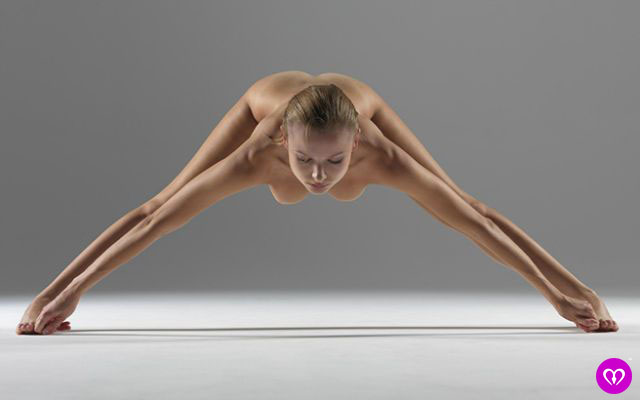
One of the advantages of naked fitness is that it does not require learning an entirely new form of exercise.
Many familiar workouts can be adapted to a clothing-optional setting, particularly when practiced privately at home.
Bodyweight exercises are a natural starting point. Squats, lunges, bridges, planks, push-ups, balance exercises, and gentle mobility drills can be performed with little or no equipment.
Strength training can also be part of naked fitness. Dumbbells, resistance bands, and other equipment may be appropriate when used with proper technique, hygiene, and any necessary protective clothing or footwear.
Stretching and mobility work allow you to slow down and notice how different joints and muscles respond to movement. These practices can be particularly useful for people who spend long periods sitting or who want to maintain comfortable everyday movement.
Pilates and barre emphasize controlled movement, posture, muscular engagement, balance, and coordination. Both can be adapted to clothing-optional exercise when the environment and movements are appropriate.
Yoga brings together movement, flexibility, breathing, balance, and mindfulness. For many people, it provides an approachable introduction to exercising without clothing.
Our guide to naked yoga explores how the practice works, its potential benefits, beginner-friendly poses, and ways to practice privately at home.
Some people also enjoy dancing, gentle conditioning, or spontaneous movement without following a formal routine.
A naked fitness session might last five minutes or an hour. It might be physically challenging, deeply relaxing, or somewhere in between.
What matters is choosing movement that suits your abilities, interests, and comfort.
Naked Yoga as a Starting Point for Naked Fitness
Yoga is particularly well suited to introducing the ideas behind naked fitness because it already encourages attention to the body.
Rather than concentrating exclusively on speed, repetitions, or physical performance, many yoga practices invite you to notice breathing, balance, posture, muscular engagement, and the relationship between movement and sensation.
Practicing yoga without clothing may make some of those sensations more noticeable.
You might become more aware of how your back lengthens during a forward fold, how your hips respond to a standing pose, or how your breathing influences tension in the shoulders and abdomen.
Without clothing covering the body, you may also find it easier to observe certain aspects of alignment and movement. However, practicing naked does not automatically improve technique, flexibility, or physical performance.
The experience can also be surprisingly simple.
A few minutes of gentle stretching, seated breathing, or familiar yoga poses may be enough to explore what clothing-optional movement feels like.
You do not need advanced flexibility, an elaborate yoga routine, or experience with nudity.
For an introduction to the practice, explore what naked yoga is and how to get started. If you’re completely new to yoga without clothing, our naked yoga for beginners guide offers a more focused starting point.
For a broader look at yoga, mindfulness, body awareness, and whole-body wellness, visit our Complete Guide to Nude Yoga.
Why Do People Practice Naked Fitness?
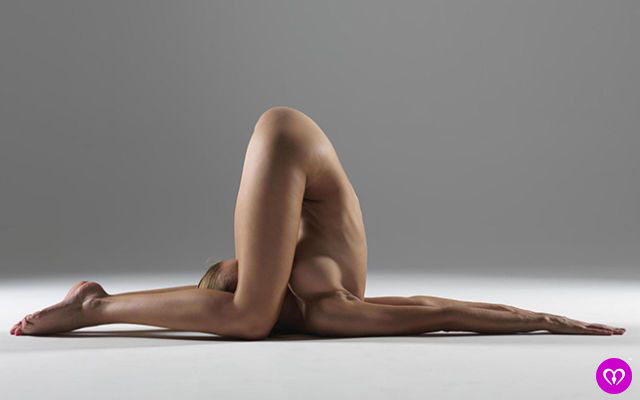
People are drawn to naked fitness for different reasons, and those motivations may change as they become more familiar with the practice.
Some simply dislike tight workout clothing. Others enjoy the sensation of moving without fabric against the skin or appreciate the freedom of practicing privately without worrying about what to wear.
Some are interested in posture, breathing, flexibility, balance, or developing greater awareness of how their bodies move.
Others are curious about the psychological experience.
For someone who has spent years criticizing their appearance, moving without clothing may offer a different perspective. Instead of standing in front of a mirror and evaluating how the body looks, the body becomes active.
It stretches, balances, lifts, bends, breathes, and responds.
That experience may encourage a shift from observing the body as an object toward appreciating what it can do.
Naked fitness can also introduce an element of playfulness into exercise. A familiar stretching routine or short workout may feel different simply because the experience is unfamiliar.
Not everyone experiences these benefits, and naked fitness is not a substitute for medical care, psychological treatment, or an appropriate exercise program.
Still, for people who enjoy the practice, it can become another way to explore physical comfort, movement, and self-acceptance.
Read more about the potential benefits of naked fitness, including its physical, emotional, and body-awareness dimensions.
Naked Fitness and Body Awareness

Body awareness is one of the most interesting aspects of naked fitness.
During ordinary exercise, it is easy to move through familiar routines without paying much attention to physical sensation.
You may complete a series of squats, stretches, or yoga poses while thinking about repetitions, time, or what comes next.
Naked fitness invites a different kind of attention.
Without clothing covering or compressing parts of the body, you may notice subtle changes in posture, muscle engagement, skin contact, balance, and range of motion.
For example, you might notice whether your shoulders rise during a difficult movement, how your weight shifts between your feet, or how your breathing changes when you hold a position.
These observations can become useful feedback.
They may encourage you to slow down, adjust a movement, or recognize when your body needs a rest.
Body awareness does not require mirrors, and it does not mean constantly monitoring appearance.
Much of it comes from sensation: feeling the floor beneath your feet, noticing muscular effort, recognizing tension, or becoming aware of how your body responds to movement.
Practices such as yoga, Pilates, mobility work, and mindful stretching can help develop this attention whether you are clothed or naked.
The difference is that removing clothing may change the experience enough to make familiar movements feel new again.
Naked Fitness and Body Confidence
Naked fitness is often associated with body confidence, but confidence is not something you need to possess before beginning.
Many people are interested in clothing-optional exercise precisely because they feel uncertain or self-conscious about their bodies.
That discomfort may be connected to aging, weight changes, pregnancy, scars, injury, illness, social comparison, or years of exposure to narrow standards of physical attractiveness.
Fitness culture can sometimes reinforce those expectations by presenting exercise primarily as a way to correct perceived flaws.
Naked fitness offers another perspective.
Instead of asking whether your body looks a particular way, you can begin by noticing what it does.
Can you stretch comfortably? Can you balance for a few seconds? Can you breathe more slowly? Can you enjoy a moment of movement without evaluating your appearance?
Those experiences may seem small, but they can help create a more practical and accepting relationship with the body.
The goal does not have to be loving every feature of your appearance.
Body neutrality, familiarity, comfort, curiosity, and self-respect are all worthwhile outcomes.
For some people, becoming comfortable spending ordinary, nonsexual time without clothing can be meaningful in itself.
Our article on how to feel good naked explores body comfort, confidence, self-acceptance, and the experience of living more comfortably in your own skin.
Naked Fitness and Mindfulness
Naked fitness can also become a form of mindful movement.
Mindfulness, in this context, means bringing attention to what is happening in the present moment rather than allowing every movement to become automatic.
You might notice the rhythm of your breathing during a stretch, the sensation of your feet against the floor, or the effort required to maintain balance.
You might become aware of tension in your neck, shoulders, hips, or back that you had not noticed before.
Practicing without clothing can change some of these sensations, although nudity is not required for mindfulness.
The important part is attention.
Rather than rushing through a workout or concentrating exclusively on repetitions, calories, or physical results, you can occasionally bring your awareness back to how movement feels.
This is one reason yoga and naked fitness fit naturally together.
Yoga often combines deliberate movement with breathing and concentration, while clothing-optional practice may add another dimension of physical awareness.
For people who enjoy slower movement, nude yoga and mindful movement can provide a way to explore this connection more deeply.
You can also learn more about the relationship between self-consciousness, body image, confidence, and awareness in our guide to the psychology of naked fitness.
Is Naked Fitness Sexual?
Naked fitness does not have to be sexual.
Although nudity and sexuality can overlap in some parts of life, being naked is not inherently a sexual experience.
People are naked when bathing, changing clothes, sleeping, receiving certain medical care, using a sauna, or simply relaxing privately at home.
In naked fitness, nudity exists primarily within the context of exercise, movement, body awareness, and personal comfort.
For some individuals or couples, practicing without clothing may contribute to feelings of intimacy, confidence, or sensual awareness. Those experiences can be part of a broader relationship with the body without making the exercise itself inherently sexual.
At Naked Fit Club, clothing-optional movement is approached as an adult fitness, wellness, mindfulness, and body-awareness practice.
Participation should always be voluntary, private when desired, and respectful of personal boundaries.
Do You Need a Certain Body Type for Naked Fitness?
No.
Naked fitness does not require a particular weight, age, body shape, level of muscularity, or fitness background.
You do not need to look like a fitness model, possess advanced flexibility, or feel completely confident about your appearance.
One of the central ideas behind the practice is that people do not need to change their bodies before they are allowed to experience movement, comfort, or self-respect.
Your body is already the body you bring to exercise.
The movements you choose should reflect your abilities, experience, mobility, health considerations, and physical comfort.
A gentle stretching routine may be appropriate for one person, while another may enjoy strength training, Pilates, yoga, or more challenging bodyweight exercises.
As with any form of fitness, progress can happen gradually.
The important thing is to begin at a level that feels appropriate and sustainable.
Do You Need to Be Completely Naked?
No.
Naked fitness can be fully nude, partially nude, or clothing-optional.
Some people begin by exercising without a shirt. Others prefer underwear, socks, or supportive clothing for particular movements.
Someone who feels comfortable practicing completely naked may still choose to wear footwear, protective equipment, or clothing when an exercise requires it.
There is no reason to force yourself into a level of nudity that feels uncomfortable.
In fact, allowing yourself to make those choices is part of the clothing-optional philosophy.
The purpose is not to follow a rule about how much clothing you remove.
It is to explore movement without assuming that conventional workout clothing is always necessary.
Where Can Naked Fitness Be Practiced?
For most people, especially beginners exploring naked fitness, home is the simplest place to start.
A private bedroom, living room, home gym, or yoga area can provide enough space for stretching, mobility exercises, bodyweight movements, and gentle workouts.
Practicing privately allows you to control the environment.
You can choose the temperature, lighting, music, equipment, mirrors, and amount of clothing you wear.
You can also begin without worrying about other people watching or evaluating your body.
A yoga mat, towel, comfortable floor surface, and enough room to move safely may be all you need.
For a more detailed introduction, our guide to naked fitness at home covers creating a private environment and building a comfortable personal practice.
Some people may eventually explore clothing-optional fitness classes, nude yoga groups, naturist environments, or other adult communities where nudity is clearly permitted.
Others prefer to keep their practice entirely private.
Both approaches are valid.
Wherever naked fitness takes place, privacy, consent, hygiene, local rules, and respect for other people remain essential.
How Do Beginners Start Naked Fitness at Home?
You do not need a complicated workout plan or a large collection of equipment to begin naked fitness.
For many people, the best introduction is simply adapting movement they already know.
Start by choosing a private, comfortable space where you will not be interrupted.
Make sure the room is warm enough, the floor is safe, and you have sufficient space to move without contacting furniture or other obstacles.
Then begin with a few familiar movements.
You might try gentle stretching, shoulder rolls, standing balance exercises, slow squats, simple mobility work, or several minutes of relaxed breathing.
If you already practice yoga, familiar poses can provide a particularly comfortable introduction.
Our beginner’s guide to naked yoga offers additional ideas for starting a private clothing-optional yoga practice.
There is no need to remove all your clothing immediately.
You can begin partially clothed, keep a towel or robe nearby, and adjust your level of nudity as you become more comfortable.
Pay attention to how the movements feel rather than how your body looks.
A short session may be enough to discover whether you enjoy the experience.
If you want more structure, visit our naked fitness beginner’s guide for practical advice on starting safely and comfortably.
Is Naked Fitness Safe?
Naked fitness can involve many of the same exercises performed while clothed, but practicing without clothing introduces a few additional considerations.
Hygiene: Equipment that normally contacts clothing may come into direct contact with bare skin. Use clean mats, towels, and appropriate barriers on benches or other shared surfaces.
Temperature: Clothing helps regulate warmth, particularly before and after exercise. Choose a comfortable environment and keep clothing or a robe available.
Support and protection: Some activities require supportive clothing, footwear, or protective equipment regardless of whether the rest of the body is unclothed.
Movement selection: Choose exercises appropriate for your abilities and physical condition. Practicing naked does not make an unsafe movement safer.
Privacy: Make sure your practice takes place somewhere nudity is appropriate and where other people’s boundaries are respected.
It is also important to recognize that naked fitness does not automatically improve flexibility, strength, balance, or posture.
Those outcomes depend on the exercise itself, appropriate technique, consistency, and individual circumstances.
If you have an injury, medical condition, mobility concern, or questions about whether an exercise is suitable for you, consult a qualified healthcare or fitness professional.
Naked Fitness Is About Awareness, Not Perfection
Modern fitness culture often emphasizes transformation.
Lose weight. Build muscle. Change your shape. Fix a problem. Reach a goal.
Those goals may have a place in someone’s fitness life, but they do not have to define every experience of movement.
Sometimes, exercise can simply be an opportunity to inhabit your body more comfortably.
You can stretch because your muscles feel tight. You can practice balance because it requires concentration. You can move because it feels enjoyable.
You can slow your breathing, notice your posture, or appreciate the physical freedom of moving without restrictive clothing.
And you can experience your body without immediately asking whether it looks good enough.
At Naked Fit Club, we see naked fitness as an invitation to develop a more direct relationship with movement and with your own body.
That relationship may include strength, flexibility, confidence, mindfulness, curiosity, relaxation, sensual awareness, or simply the pleasure of moving naturally.
There is no perfect naked fitness practice and no ideal naked fitness body.
There is simply your body, the movement you choose, and an opportunity to pay attention.
Exploring Naked Fitness: Where to Go Next
Naked fitness can begin with something as simple as a few minutes of stretching without clothing. Over time, it may lead you toward other forms of movement, a greater interest in body awareness, or a broader approach to personal well-being.
If you’re interested in the physical and emotional aspects of the practice, explore the benefits of naked fitness.
If you’re just getting started, our naked fitness guide for beginners explains how to begin comfortably and safely.
For people who prefer practicing privately, naked fitness at home offers ideas for creating a personal movement space.
And if you’re interested in combining movement, breathing, flexibility, mindfulness, and body awareness, naked yoga is a natural place to explore further. You can also read about the potential benefits of naked yoga or explore our broader nude yoga guide.
You do not have to follow every path.
Begin with whatever interests you, choose movement that feels appropriate, and allow your relationship with your body to develop at its own pace.
Private. Personal. On your terms.
2026 GUIDE | UPDATED: 10/09/2026
Naked Fitness
A complete guide to nude exercise, movement and whole-body wellness.
What Is Naked Fitness?
Naked fitness is a clothing-optional approach to exercise, movement, and whole-body well-being. It begins with the simple experience of moving without clothing, but it can also encourage greater body awareness, mindfulness, confidence, physical freedom, and a more comfortable relationship with your body.
At its most basic level, naked fitness means exercising or moving without clothes. That might involve yoga, stretching, strength training, Pilates, mobility exercises, bodyweight workouts, dance, or a few quiet minutes of breathing and movement at home.
But naked fitness is not necessarily a particular workout, exercise program, or fitness philosophy. It is a different way of experiencing activities that many people already practice.
When clothing becomes optional, the physical experience of movement may change. You might notice how your shoulders move during a stretch, how your abdominal muscles engage during a plank, how your breathing changes with effort, or how your body responds to balance and changes in posture.
For some people, that heightened awareness is the most interesting part of exercising naked. For others, the appeal is simpler: freedom from restrictive clothing, greater physical comfort, or the enjoyment of moving naturally.
At Naked Fit Club, we believe the experience can also lead to a broader conversation about health and well-being.
Fitness is not only about completing workouts, building muscle, losing weight, or changing how your body looks. Nourishment, recovery, sleep, stress, mindfulness, mobility, and the way you relate to your body all influence how you feel and function.
Naked fitness offers an opportunity to bring some of those ideas together. Removing clothing can make movement feel more immediate, while encouraging curiosity about the body rather than constant evaluation of its appearance.
That does not mean everyone will experience naked fitness in the same way. Some people feel comfortable immediately. Others may need time to become familiar with the experience. Some prefer partial nudity, and others may discover that certain exercises simply feel better with clothing or support.
There is no ideal naked fitness body, required level of confidence, or single correct way to participate.
The central idea is to shift attention from how your body looks toward how it moves, feels, functions, and responds to the world around you.
For a deeper exploration of the practice, read our Complete Guide to Naked Fitness, which examines its history, principles, benefits, and relationship to whole-body wellness.
What Types of Exercise Can Be Part of Naked Fitness?
One of the advantages of naked fitness is that it does not require learning an entirely new form of exercise.
Many familiar workouts can be adapted to a clothing-optional setting, particularly when practiced privately at home.
Bodyweight exercises are a natural starting point. Squats, lunges, bridges, planks, push-ups, balance exercises, and gentle mobility drills can be performed with little or no equipment.
Strength training can also be part of naked fitness. Dumbbells, resistance bands, and other equipment may be appropriate when used with proper technique, hygiene, and any necessary protective clothing or footwear.
Stretching and mobility work allow you to slow down and notice how different joints and muscles respond to movement. These practices can be particularly useful for people who spend long periods sitting or who want to maintain comfortable everyday movement.
Pilates and barre emphasize controlled movement, posture, muscular engagement, balance, and coordination. Both can be adapted to clothing-optional exercise when the environment and movements are appropriate.
Yoga brings together movement, flexibility, breathing, balance, and mindfulness. For many people, it provides an approachable introduction to exercising without clothing.
Our guide to naked yoga explores how the practice works, its potential benefits, beginner-friendly poses, and ways to practice privately at home.
Some people also enjoy dancing, gentle conditioning, or spontaneous movement without following a formal routine.
A naked fitness session might last five minutes or an hour. It might be physically challenging, deeply relaxing, or somewhere in between.
What matters is choosing movement that suits your abilities, interests, and comfort.
Naked Yoga as a Starting Point for Naked Fitness
Yoga is particularly well suited to introducing the ideas behind naked fitness because it already encourages attention to the body.
Rather than concentrating exclusively on speed, repetitions, or physical performance, many yoga practices invite you to notice breathing, balance, posture, muscular engagement, and the relationship between movement and sensation.
Practicing yoga without clothing may make some of those sensations more noticeable.
You might become more aware of how your back lengthens during a forward fold, how your hips respond to a standing pose, or how your breathing influences tension in the shoulders and abdomen.
Without clothing covering the body, you may also find it easier to observe certain aspects of alignment and movement. However, practicing naked does not automatically improve technique, flexibility, or physical performance.
The experience can also be surprisingly simple.
A few minutes of gentle stretching, seated breathing, or familiar yoga poses may be enough to explore what clothing-optional movement feels like.
You do not need advanced flexibility, an elaborate yoga routine, or experience with nudity.
For an introduction to the practice, explore what naked yoga is and how to get started. If you’re completely new to yoga without clothing, our naked yoga for beginners guide offers a more focused starting point.
For a broader look at yoga, mindfulness, body awareness, and whole-body wellness, visit our Complete Guide to Nude Yoga.
Why Do People Practice Naked Fitness?
People are drawn to naked fitness for different reasons, and those motivations may change as they become more familiar with the practice.
Some simply dislike tight workout clothing. Others enjoy the sensation of moving without fabric against the skin or appreciate the freedom of practicing privately without worrying about what to wear.
Some are interested in posture, breathing, flexibility, balance, or developing greater awareness of how their bodies move.
Others are curious about the psychological experience.
For someone who has spent years criticizing their appearance, moving without clothing may offer a different perspective. Instead of standing in front of a mirror and evaluating how the body looks, the body becomes active.
It stretches, balances, lifts, bends, breathes, and responds.
That experience may encourage a shift from observing the body as an object toward appreciating what it can do.
Naked fitness can also introduce an element of playfulness into exercise. A familiar stretching routine or short workout may feel different simply because the experience is unfamiliar.
Not everyone experiences these benefits, and naked fitness is not a substitute for medical care, psychological treatment, or an appropriate exercise program.
Still, for people who enjoy the practice, it can become another way to explore physical comfort, movement, and self-acceptance.
Read more about the potential benefits of naked fitness, including its physical, emotional, and body-awareness dimensions.
Naked Fitness and Body Awareness
Body awareness is one of the most interesting aspects of naked fitness.
During ordinary exercise, it is easy to move through familiar routines without paying much attention to physical sensation.
You may complete a series of squats, stretches, or yoga poses while thinking about repetitions, time, or what comes next.
Naked fitness invites a different kind of attention.
Without clothing covering or compressing parts of the body, you may notice subtle changes in posture, muscle engagement, skin contact, balance, and range of motion.
For example, you might notice whether your shoulders rise during a difficult movement, how your weight shifts between your feet, or how your breathing changes when you hold a position.
These observations can become useful feedback.
They may encourage you to slow down, adjust a movement, or recognize when your body needs a rest.
Body awareness does not require mirrors, and it does not mean constantly monitoring appearance.
Much of it comes from sensation: feeling the floor beneath your feet, noticing muscular effort, recognizing tension, or becoming aware of how your body responds to movement.
Practices such as yoga, Pilates, mobility work, and mindful stretching can help develop this attention whether you are clothed or naked.
The difference is that removing clothing may change the experience enough to make familiar movements feel new again.
Naked Fitness and Body Confidence
Naked fitness is often associated with body confidence, but confidence is not something you need to possess before beginning.
Many people are interested in clothing-optional exercise precisely because they feel uncertain or self-conscious about their bodies.
That discomfort may be connected to aging, weight changes, pregnancy, scars, injury, illness, social comparison, or years of exposure to narrow standards of physical attractiveness.
Fitness culture can sometimes reinforce those expectations by presenting exercise primarily as a way to correct perceived flaws.
Naked fitness offers another perspective.
Instead of asking whether your body looks a particular way, you can begin by noticing what it does.
Can you stretch comfortably? Can you balance for a few seconds? Can you breathe more slowly? Can you enjoy a moment of movement without evaluating your appearance?
Those experiences may seem small, but they can help create a more practical and accepting relationship with the body.
The goal does not have to be loving every feature of your appearance.
Body neutrality, familiarity, comfort, curiosity, and self-respect are all worthwhile outcomes.
For some people, becoming comfortable spending ordinary, nonsexual time without clothing can be meaningful in itself.
Our article on how to feel good naked explores body comfort, confidence, self-acceptance, and the experience of living more comfortably in your own skin.
Naked Fitness and Mindfulness
Naked fitness can also become a form of mindful movement.
Mindfulness, in this context, means bringing attention to what is happening in the present moment rather than allowing every movement to become automatic.
You might notice the rhythm of your breathing during a stretch, the sensation of your feet against the floor, or the effort required to maintain balance.
You might become aware of tension in your neck, shoulders, hips, or back that you had not noticed before.
Practicing without clothing can change some of these sensations, although nudity is not required for mindfulness.
The important part is attention.
Rather than rushing through a workout or concentrating exclusively on repetitions, calories, or physical results, you can occasionally bring your awareness back to how movement feels.
This is one reason yoga and naked fitness fit naturally together.
Yoga often combines deliberate movement with breathing and concentration, while clothing-optional practice may add another dimension of physical awareness.
For people who enjoy slower movement, nude yoga and mindful movement can provide a way to explore this connection more deeply.
You can also learn more about the relationship between self-consciousness, body image, confidence, and awareness in our guide to the psychology of naked fitness.
Is Naked Fitness Sexual?
Naked fitness does not have to be sexual.
Although nudity and sexuality can overlap in some parts of life, being naked is not inherently a sexual experience.
People are naked when bathing, changing clothes, sleeping, receiving certain medical care, using a sauna, or simply relaxing privately at home.
In naked fitness, nudity exists primarily within the context of exercise, movement, body awareness, and personal comfort.
For some individuals or couples, practicing without clothing may contribute to feelings of intimacy, confidence, or sensual awareness. Those experiences can be part of a broader relationship with the body without making the exercise itself inherently sexual.
At Naked Fit Club, clothing-optional movement is approached as an adult fitness, wellness, mindfulness, and body-awareness practice.
Participation should always be voluntary, private when desired, and respectful of personal boundaries.
Do You Need a Certain Body Type for Naked Fitness?
No.
Naked fitness does not require a particular weight, age, body shape, level of muscularity, or fitness background.
You do not need to look like a fitness model, possess advanced flexibility, or feel completely confident about your appearance.
One of the central ideas behind the practice is that people do not need to change their bodies before they are allowed to experience movement, comfort, or self-respect.
Your body is already the body you bring to exercise.
The movements you choose should reflect your abilities, experience, mobility, health considerations, and physical comfort.
A gentle stretching routine may be appropriate for one person, while another may enjoy strength training, Pilates, yoga, or more challenging bodyweight exercises.
As with any form of fitness, progress can happen gradually.
The important thing is to begin at a level that feels appropriate and sustainable.
Do You Need to Be Completely Naked?
No.
Naked fitness can be fully nude, partially nude, or clothing-optional.
Some people begin by exercising without a shirt. Others prefer underwear, socks, or supportive clothing for particular movements.
Someone who feels comfortable practicing completely naked may still choose to wear footwear, protective equipment, or clothing when an exercise requires it.
There is no reason to force yourself into a level of nudity that feels uncomfortable.
In fact, allowing yourself to make those choices is part of the clothing-optional philosophy.
The purpose is not to follow a rule about how much clothing you remove.
It is to explore movement without assuming that conventional workout clothing is always necessary.
Where Can Naked Fitness Be Practiced?
For most people, especially beginners exploring naked fitness, home is the simplest place to start.
A private bedroom, living room, home gym, or yoga area can provide enough space for stretching, mobility exercises, bodyweight movements, and gentle workouts.
Practicing privately allows you to control the environment.
You can choose the temperature, lighting, music, equipment, mirrors, and amount of clothing you wear.
You can also begin without worrying about other people watching or evaluating your body.
A yoga mat, towel, comfortable floor surface, and enough room to move safely may be all you need.
For a more detailed introduction, our guide to naked fitness at home covers creating a private environment and building a comfortable personal practice.
Some people may eventually explore clothing-optional fitness classes, nude yoga groups, naturist environments, or other adult communities where nudity is clearly permitted.
Others prefer to keep their practice entirely private.
Both approaches are valid.
Wherever naked fitness takes place, privacy, consent, hygiene, local rules, and respect for other people remain essential.
How Do Beginners Start Naked Fitness at Home?
You do not need a complicated workout plan or a large collection of equipment to begin naked fitness.
For many people, the best introduction is simply adapting movement they already know.
Start by choosing a private, comfortable space where you will not be interrupted.
Make sure the room is warm enough, the floor is safe, and you have sufficient space to move without contacting furniture or other obstacles.
Then begin with a few familiar movements.
You might try gentle stretching, shoulder rolls, standing balance exercises, slow squats, simple mobility work, or several minutes of relaxed breathing.
If you already practice yoga, familiar poses can provide a particularly comfortable introduction.
Our beginner’s guide to naked yoga offers additional ideas for starting a private clothing-optional yoga practice.
There is no need to remove all your clothing immediately.
You can begin partially clothed, keep a towel or robe nearby, and adjust your level of nudity as you become more comfortable.
Pay attention to how the movements feel rather than how your body looks.
A short session may be enough to discover whether you enjoy the experience.
If you want more structure, visit our naked fitness beginner’s guide for practical advice on starting safely and comfortably.
Is Naked Fitness Safe?
Naked fitness can involve many of the same exercises performed while clothed, but practicing without clothing introduces a few additional considerations.
Hygiene: Equipment that normally contacts clothing may come into direct contact with bare skin. Use clean mats, towels, and appropriate barriers on benches or other shared surfaces.
Temperature: Clothing helps regulate warmth, particularly before and after exercise. Choose a comfortable environment and keep clothing or a robe available.
Support and protection: Some activities require supportive clothing, footwear, or protective equipment regardless of whether the rest of the body is unclothed.
Movement selection: Choose exercises appropriate for your abilities and physical condition. Practicing naked does not make an unsafe movement safer.
Privacy: Make sure your practice takes place somewhere nudity is appropriate and where other people’s boundaries are respected.
It is also important to recognize that naked fitness does not automatically improve flexibility, strength, balance, or posture.
Those outcomes depend on the exercise itself, appropriate technique, consistency, and individual circumstances.
If you have an injury, medical condition, mobility concern, or questions about whether an exercise is suitable for you, consult a qualified healthcare or fitness professional.
Naked Fitness Is About Awareness, Not Perfection
Modern fitness culture often emphasizes transformation.
Lose weight. Build muscle. Change your shape. Fix a problem. Reach a goal.
Those goals may have a place in someone’s fitness life, but they do not have to define every experience of movement.
Sometimes, exercise can simply be an opportunity to inhabit your body more comfortably.
You can stretch because your muscles feel tight. You can practice balance because it requires concentration. You can move because it feels enjoyable.
You can slow your breathing, notice your posture, or appreciate the physical freedom of moving without restrictive clothing.
And you can experience your body without immediately asking whether it looks good enough.
At Naked Fit Club, we see naked fitness as an invitation to develop a more direct relationship with movement and with your own body.
That relationship may include strength, flexibility, confidence, mindfulness, curiosity, relaxation, sensual awareness, or simply the pleasure of moving naturally.
There is no perfect naked fitness practice and no ideal naked fitness body.
There is simply your body, the movement you choose, and an opportunity to pay attention.
Exploring Naked Fitness: Where to Go Next
Naked fitness can begin with something as simple as a few minutes of stretching without clothing. Over time, it may lead you toward other forms of movement, a greater interest in body awareness, or a broader approach to personal well-being.
If you’re interested in the physical and emotional aspects of the practice, explore the benefits of naked fitness.
If you’re just getting started, our naked fitness guide for beginners explains how to begin comfortably and safely.
For people who prefer practicing privately, naked fitness at home offers ideas for creating a personal movement space.
And if you’re interested in combining movement, breathing, flexibility, mindfulness, and body awareness, naked yoga is a natural place to explore further. You can also read about the potential benefits of naked yoga or explore our broader nude yoga guide.
You do not have to follow every path.
Begin with whatever interests you, choose movement that feels appropriate, and allow your relationship with your body to develop at its own pace.
Private. Personal. On your terms.

Frequently Asked Questions About Naked Fitness
What is naked fitness?
Naked fitness is the practice of exercising or intentionally moving without clothing, usually in a private, comfortable, and nonsexual setting. It can include strength training, yoga, stretching, mobility, cardio, breathwork, meditation, and other forms of mindful movement. More broadly, naked fitness encourages greater attention to how the body moves, feels, and functions. Learn more in our complete guide to naked fitness.
What is the purpose of naked fitness?
The purpose of naked fitness varies from person to person. Some people practice to develop greater body awareness, reduce distractions from clothing, build confidence, or create a more mindful relationship with movement. Others simply enjoy the physical freedom of exercising without restrictive clothing. At Naked Fit Club, the emphasis is on movement, self-acceptance, personal comfort, and experiencing the body rather than constantly evaluating its appearance.
What are the benefits of exercising naked?
Potential benefits of naked fitness include greater body awareness, improved self-acceptance, fewer distractions from clothing, increased comfort with your body, and a stronger connection between movement and physical sensation. Some people also find the experience relaxing, playful, or personally empowering. These benefits are not guaranteed and vary from person to person. Explore our full guide to the benefits of naked fitness.
Is naked fitness the same as nude exercise?
Yes. Naked fitness and nude exercise generally describe the same basic idea: exercising without clothing. Naked Fit Club uses the term naked fitness more broadly to include traditional exercise as well as yoga, Pilates, stretching, mobility, body awareness, breathwork, mindfulness, recovery, and other practices that support a more comfortable relationship with the body.
Is naked fitness sexual?
Naked fitness is not inherently sexual. At Naked Fit Club, nudity is approached primarily in the context of fitness, wellness, movement, mindfulness, body awareness, and self-acceptance. Being unclothed does not automatically make an activity sexual. Although some people may experience greater sensual awareness or intimacy through clothing-optional movement, many practice naked fitness simply to develop a more comfortable, neutral, and accepting relationship with their bodies.
Do you have to be completely naked to practice naked fitness?
No. Naked fitness does not have to be all-or-nothing. Some people begin partially clothed, remove layers gradually, or wear supportive clothing or footwear when appropriate. The goal is not to meet a particular standard of nudity, but to create an environment where you can focus on movement, physical sensation, comfort, and your own experience. Clothing is always optional, and personal boundaries should be respected.
Do you need a certain body type to exercise naked?
No. Naked fitness is not limited to a particular age, shape, size, fitness level, or body type. One of its central ideas is learning to experience the body as it actually is rather than waiting until it matches an idealized appearance. You do not need to change your body before you are allowed to move, exercise, or feel comfortable in it. Exercises should be selected according to your abilities, health considerations, and physical comfort.
Can beginners practice naked fitness?
Yes. Beginners can start slowly and privately, often at home, with familiar exercises such as stretching, mobility work, yoga, bodyweight movements, or simple strength training. There is no need to begin with an intense workout, advanced exercises, or a group setting. Our naked fitness for beginners guide explains how to start comfortably. For a gentler introduction through stretching, breathing, and mindful movement, explore our naked yoga for beginners guide.
Can I practice naked fitness privately at home?
Yes. Home is one of the easiest places to begin because you can control your privacy, temperature, lighting, environment, and pace. You can follow a workout, stretch, practice yoga, or explore movement without the pressure of being around other people. A private room, comfortable surface, and enough space to move safely may be all you need. See our guide to practicing naked fitness at home.
What exercises can you do naked?
Many exercises that can be performed safely while clothed can also be adapted to a clothing-optional environment. Common options include yoga, stretching, mobility work, bodyweight training, resistance exercises, low-impact cardio, Pilates, barre, breathwork, and mindful movement. Some activities may require supportive clothing, footwear, or protective equipment. Comfort, hygiene, equipment safety, and appropriate exercise technique should always come first.
Is naked yoga a form of naked fitness?
Yes. Naked yoga is one of the most recognizable forms of naked fitness, combining traditional yoga poses, breathing, balance, flexibility, strength, and mindfulness without clothing. Also called nude yoga, the practice can encourage greater awareness of posture, movement, physical sensation, and the relationship between mind and body.
For many beginners, naked yoga is an accessible introduction to clothing-optional exercise because it can be practiced privately at home, requires little equipment, and can be adapted to different fitness levels.
Explore our complete guide to naked yoga, naked yoga for beginners, and broader nude yoga guide.
Can naked fitness improve body awareness?
It can. Without clothing covering the body, some people become more aware of posture, muscle engagement, balance, breathing, tension, and how different movements feel. This increased awareness may encourage a more mindful approach to exercise in which attention shifts away from appearance and toward physical sensation and function. Yoga, stretching, Pilates, and mobility exercises can be particularly useful for exploring this connection.
Can naked fitness help with body confidence?
For some people, naked fitness can support body confidence by creating repeated opportunities to see and experience the body without judgment. Over time, the body may begin to feel less like something that needs to be evaluated and more like something to inhabit, move, care for, and appreciate. Confidence does not have to mean loving every aspect of your appearance. Body neutrality, familiarity, self-respect, and comfort are equally valuable. Explore our guide to feeling good naked.
Is naked fitness safe?
Naked fitness can be practiced safely when the same basic precautions used for any exercise program are followed. Choose appropriate movements, use equipment carefully, maintain good hygiene, stay aware of your surroundings, and stop if something causes pain or discomfort. Use towels or personal mats where bare skin contacts equipment, maintain a comfortable room temperature, and wear protective or supportive clothing when necessary. Naked Fit Club content is provided for general educational, informational, and entertainment purposes and is not medical advice.
Do I need to participate in a group to practice naked fitness?
No. Naked fitness can be completely private. You can practice alone at home using articles, instructional videos, guided movement, or your own routines. You do not need to join a group, attend a clothing-optional class, appear on camera, or exercise naked in front of other people to explore naked fitness or use Naked Fit Club. Private, personal practice is a central part of our approach.
How do I start practicing naked fitness?
Start with a private, comfortable environment and a form of movement you already know. You might begin with five or ten minutes of stretching, yoga, mobility work, breathing exercises, or a familiar workout without clothing. Keep a towel or robe nearby, choose movements appropriate for your abilities, and avoid pushing beyond your physical or personal comfort level. Gradual familiarity and consistency can be more useful than trying to feel completely confident on day one. Our beginner’s guide to naked fitness offers a practical place to start.
RECENT NAKED FITNESS ARTICLES
Benefits of Naked Yoga: Body Awareness, Confidence & Mindfulness
Explore the benefits of nude yoga, including body awareness, confidence, mindfulness, freedom of movement, sensuality, and relaxation.
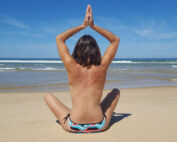
Nude Yoga for Beginners: How to Start Safely at Home
Learn how to start nude yoga at home with simple beginner poses, mindful movement, body awareness, confidence, and practical tips for your first practice.

Feel Good Naked: Confidence, Strength, Sexual Wellbeing & Vitality
Feel good naked through strength, energy, confidence, sexual wellbeing, physical comfort, self-respect, and a healthier connection with your body.
The Psychology of Naked Fitness: Confidence, Body Image & Wellness
Explore how naked fitness can support body image, confidence, mindfulness, sexuality, playfulness, and a more comfortable relationship with your body.

Naked Fitness at Home: Safe, Private & Beginner-Friendly
Learn how to practice naked fitness at home with confidence, privacy, mindful movement, and simple wellness routines you'll actually want to maintain.
Naked Fitness for Beginners – How to Start Safely and Comfortably
Learn how to start naked fitness with confidence. Discover beginner tips for body awareness, mindfulness, movement, and self-acceptance.