
NAKED FITNESS
The Health Benefits of Naked Fitness
NAKED FIT CLUB
Discover how naked fitness can support body awareness, confidence, stress relief, and overall well-being.
Is Naked Fitness Healthy?
A wellness-focused look at how naked fitness may support body awareness, confidence, mindfulness, stress reduction, and a healthier relationship with movement.
Many people first hear about naked fitness and immediately wonder whether it is actually healthy.
The answer depends on how the practice is approached.
When practiced in a safe, respectful, private, and wellness-focused environment, naked fitness can support several areas of physical, emotional, and mental well-being. For many practitioners, the health benefits are less about exercising without clothing and more about what the experience makes possible: greater body awareness, improved self-acceptance, reduced self-consciousness, and a more mindful relationship with movement.
Naked fitness is not a magic solution, and it is not right for everyone. But for people who are curious, comfortable, and intentional, it can become a healthy and sustainable wellness practice.
If you are new to the concept, start with our guide explaining what naked fitness is or visit the Complete Guide to Naked Fitness for a broader introduction.
What Makes Naked Fitness Healthy?
Naked fitness can be healthy when the focus is on movement, awareness, comfort, consent, and personal well-being.
In healthy naked fitness environments, the purpose is not performance, exhibitionism, or appearance. The purpose is to create a more direct relationship with the body through mindful movement.
This may include:
- Stretching
- Yoga
- Pilates
- Mobility training
- Breathwork
- Meditation
- Functional movement
- Gentle strength work
These practices can support the body in familiar ways while also encouraging a deeper sense of presence and awareness.
Physical Health Benefits of Naked Fitness
From a physical perspective, naked fitness can include many of the same benefits as other forms of intentional movement.
Depending on the practice, participants may experience improvements in:
- Flexibility
- Mobility
- Balance
- Posture
- Strength
- Coordination
- Breathing mechanics
- Movement quality
Because clothing is removed, some people also notice fewer distractions from tight waistbands, restrictive fabrics, seams, or compression garments. This can make certain movements feel more natural and unrestricted.
For a deeper look at these outcomes, read our guide to the benefits of naked fitness.
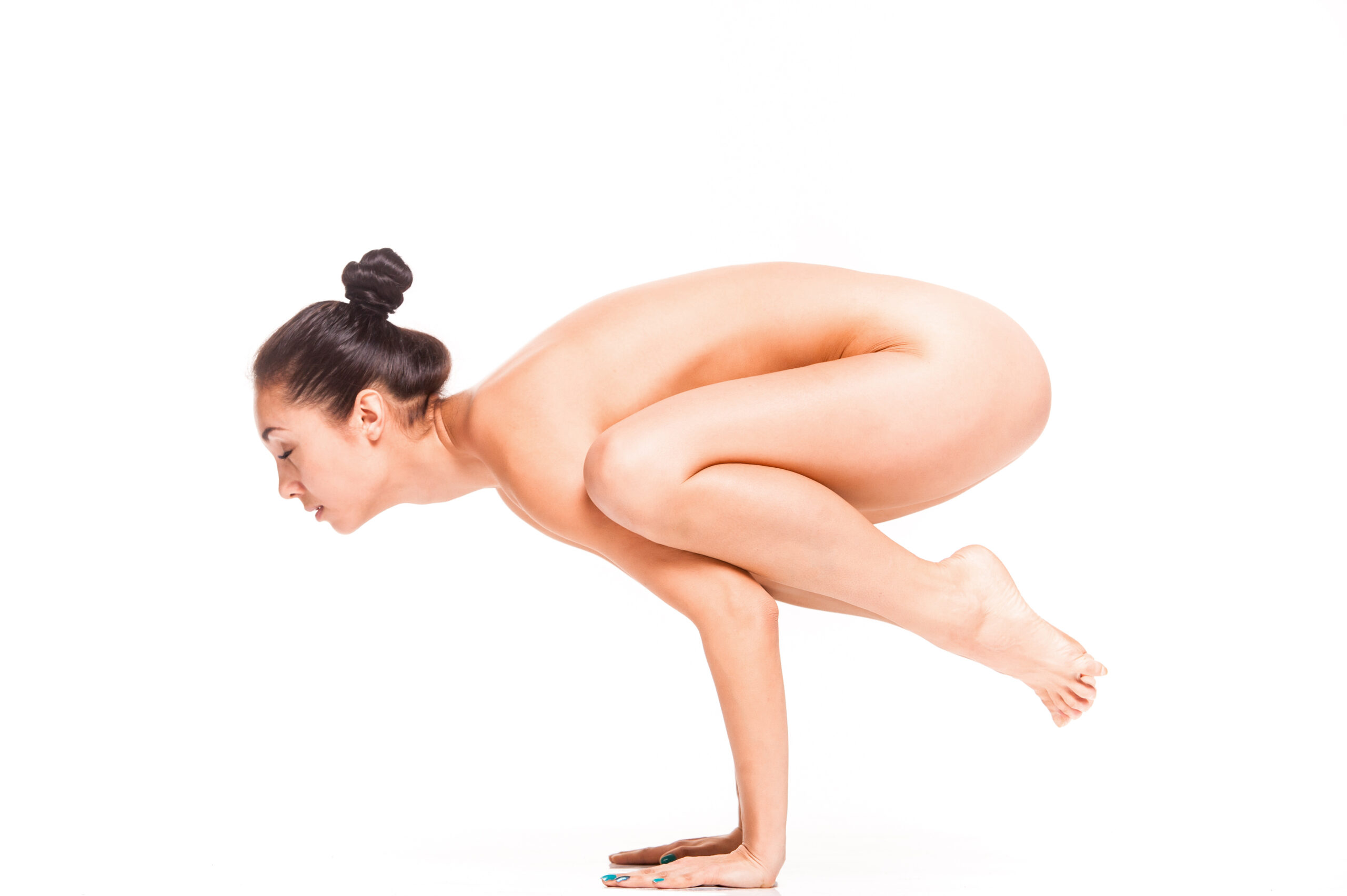
Naked Fitness and Body Awareness
One of the strongest health-related benefits of naked fitness is increased body awareness.
Body awareness is the ability to notice posture, movement patterns, breathing, tension, balance, and physical sensations.
Without clothing, many practitioners become more aware of:
- How they stand
- How they breathe
- Where they hold tension
- How their muscles engage
- How their body moves through space
- Where movement feels restricted or comfortable
This awareness can make exercise feel more intuitive and connected. Instead of simply going through motions, practitioners learn to notice how the body responds during movement.
Mental and Emotional Health Benefits
Naked fitness may also support mental and emotional wellness.
Many people carry stress, judgment, or discomfort around their bodies. Traditional fitness environments can sometimes intensify those feelings by emphasizing mirrors, comparison, performance, or appearance-based goals.
Naked fitness often shifts the experience inward.
Instead of asking, “How do I look?” the practice invites a different question:
“How do I feel?”
This shift can support:
- Greater self-acceptance
- Reduced self-consciousness
- Improved body confidence
- Less comparison
- More mindfulness
- A calmer relationship with exercise
For many people, that emotional shift is one of the healthiest parts of the practice.
Can Naked Fitness Help With Stress?
Many naked fitness practices include slow movement, breathwork, stretching, yoga, or mindfulness.
These activities can help the body slow down and return attention to the present moment.
Rather than treating exercise as another source of pressure, naked fitness can become a way to regulate stress, release tension, and reconnect with the body.
This is especially true when the practice is gentle, intentional, and focused on awareness rather than intensity.
Naked Fitness and Nervous System Wellness
The nervous system affects stress, recovery, sleep, energy, and emotional balance.
Because many naked fitness routines combine breath, movement, grounding, and body awareness, they may support a calmer internal state.
Practitioners often describe feeling:
- More relaxed
- More grounded
- Less tense
- More present
- More connected to themselves
While individual experiences vary, this is one reason naked fitness can feel different from appearance-focused exercise. It is not only about working out. It is also about learning how to feel safe, present, and comfortable in the body.
Is Naked Fitness Good for Body Confidence?
For many practitioners, yes.
Naked fitness can help people experience their bodies without the usual layers of judgment, comparison, or concealment.
At first, this may feel vulnerable. Over time, many people find that the body begins to feel more normal, familiar, and acceptable.
This does not mean everyone suddenly feels perfectly confident. Instead, confidence often develops gradually through repeated experiences of being present with the body without criticism.
That gradual process can support a healthier relationship with the body and with fitness itself.
When Is Naked Fitness Not Healthy?
Naked fitness is not automatically healthy in every setting.
The practice becomes unhealthy when it lacks boundaries, consent, privacy, respect, or emotional safety.
Unhealthy environments may include:
- Pressure to participate before someone is ready
- Appearance-based judgment
- Sexualized behavior in wellness spaces
- Lack of clear rules or boundaries
- Unsafe physical instruction
- Disrespect for privacy or consent
A healthy naked fitness environment should always prioritize comfort, safety, consent, and wellness.
How Beginners Can Practice Naked Fitness Safely
Beginners should start slowly and choose a private, comfortable environment.
Good first steps include:
- Practicing at home
- Starting with short sessions
- Choosing gentle movement
- Using a clean mat or towel
- Paying attention to comfort
- Avoiding movements that feel unstable
- Progressing gradually
You do not need to begin with a full workout. A few minutes of stretching, breathwork, or mindful movement can be enough.
For a step-by-step introduction, read our Naked Fitness for Beginners guide.
So, Is Naked Fitness Healthy?
Naked fitness can be healthy when it is practiced with intention, safety, respect, and self-awareness.
Its value comes from combining movement with body awareness, mindfulness, self-acceptance, and freedom from appearance-based pressure.
For some people, it supports confidence. For others, it supports stress relief, mobility, relaxation, or a more sustainable relationship with exercise.
The healthiest version of naked fitness is not about proving anything.
It is about learning to feel more comfortable, present, and connected in your own body.
To continue exploring the practice, read What Is Naked Fitness?, explore the Benefits of Naked Fitness, or visit the Complete Guide to Naked Fitness.
RELATED POSTS

Naked Fitness at Home
Learn how to practice naked fitness at home with confidence, privacy, mindful movement, and simple wellness routines you'll actually want to maintain.
Beginners Guide to Naked Fitness: How to Start Safely and Comfortably
Learn how to start naked fitness with confidence. Discover beginner tips for body awareness, mindfulness, movement, and self-acceptance.
The Benefits of Naked Fitness
Discover the benefits of naked fitness, including improved body confidence, mindfulness, body awareness, stress relief, and overall wellness.

What Is Naked Fitness?
Learn what naked fitness is, how it works, its benefits, and why more people are embracing mindful movement without clothing.
Naked Fitness Frequently Asked Questions (FAQs)
What is naked fitness?
Naked fitness is the practice of exercising without clothing in a safe, intentional, wellness-focused environment. It can include yoga, pilates, stretching, mobility, breathwork, strength training, dance, meditation, and mindful movement. The purpose is not performance or exhibitionism. The purpose is body awareness, comfort, confidence, and connection.
Is naked fitness sexual?
No. In a legitimate naked fitness or clothing-optional wellness setting, the focus is movement, mindfulness, nervous system regulation, body acceptance, and personal well-being. Clear boundaries, consent, and respectful participation are essential parts of the experience.
Do I have to be fully nude to participate?
Not always. Many naked fitness spaces, including clothing-optional environments, allow participants to choose their comfort level. Some people begin partially clothed and gradually become more comfortable over time. The goal is not pressure. The goal is presence.
Is naked fitness only for people with certain body types?
No. Naked fitness is for real bodies of different shapes, sizes, ages, backgrounds, and fitness levels. One of the main benefits of the practice is learning to experience the body as capable, sensory, and functional rather than something that needs to fit a narrow ideal.
What are the benefits of naked fitness?
Potential benefits include improved body awareness, greater self-acceptance, reduced self-consciousness, enhanced freedom of movement, better posture awareness, increased mindfulness, stress reduction, and a more sustainable relationship with exercise. Many people find that movement feels less performative and more personal.
How does naked fitness support body confidence?
Naked fitness can help shift attention away from how the body looks and toward what the body feels and does. Over time, participants may become less focused on perceived imperfections and more aware of strength, mobility, breath, balance, and physical capability.
Can naked fitness help with body image?
For many people, yes. Practicing movement without clothing can reduce shame and comparison by creating a more honest, accepting relationship with the body. It allows people to experience their bodies directly rather than through clothing, mirrors, trends, or external expectations.
What is the difference between naked fitness and nude yoga?
Nude yoga is one type of naked fitness. Naked fitness is a broader category that may include yoga, pilates, mobility, functional movement, stretching, strength training, dance, breathwork, and relaxation practices. Nude yoga focuses specifically on yoga-based movement and poses.
Is naked fitness good for beginners?
Yes. Naked fitness can be beginner-friendly when classes are designed with accessibility, consent, and modifications in mind. Beginners can start with simple practices like stretching, breathwork, mobility, gentle yoga, or short daily movement rituals at home.
How do I start naked fitness at home?
Start with a private, comfortable space. Try a short routine such as five to ten minutes of stretching, breathwork, gentle yoga, or mobility. Focus on how your body feels rather than how it looks. Over time, you can increase the length or variety of your practice.
What should I expect in a naked fitness class?
A well-run naked fitness class should feel structured, respectful, and wellness-focused. You can expect clear instructions, professional boundaries, movement guidance, and an emphasis on comfort and consent. The atmosphere should support safety, mindfulness, and body acceptance.
What types of classes are part of naked fitness?
Naked fitness may include nude or clothing-optional yoga, pilates, mobility training, stretching, dance, sensory movement, functional fitness, strength training, breathwork, meditation, grounding practices, and nervous system regulation sessions.
Is naked fitness safe?
Naked fitness can be safe when practiced in an appropriate environment with clear boundaries, respectful participants, professional guidance, and attention to physical limitations. As with any exercise practice, participants should listen to their bodies and modify movements as needed.
What if I feel nervous or self-conscious?
Feeling nervous at first is completely normal. Many people begin with hesitation. The practice is not about instantly feeling confident. It is about gradually building comfort, awareness, and trust in your body. Starting privately or choosing clothing-optional participation can make the transition easier.
Do I need fitness experience before trying naked fitness?
No. Naked fitness can be adapted to many experience levels. You do not need to be flexible, strong, thin, athletic, or experienced. The best place to begin is with simple, low-pressure movement that helps you feel more connected to your body.
How does naked fitness support nervous system regulation?
Many naked fitness practices combine gentle movement, breathwork, grounding, and sensory awareness. These practices can help the body shift out of stress and into a calmer, more regulated state. When movement feels soothing instead of punishing, it can become easier to practice consistently.
Why does removing clothing change the fitness experience?
Clothing can sometimes create distraction, restriction, comparison, or discomfort. Removing it can increase awareness of posture, breath, muscle engagement, skin sensation, temperature, balance, and movement patterns. For many people, this makes exercise feel more honest and embodied.
Is naked fitness the same as naturism or nudism?
They can overlap, but they are not exactly the same. Naturism and nudism are broader lifestyle or recreational philosophies around non-sexual nudity. Naked fitness specifically focuses on movement, physical wellness, mindfulness, and body connection.
What should I bring to a naked fitness class?
Bring anything requested by the class provider. Common items may include a yoga mat, towel, water bottle, and any supportive props you need. In nude or clothing-optional spaces, towels are often used for comfort, hygiene, and personal boundaries.
Can I do naked fitness if I have mobility limitations?
Often, yes. Many naked fitness practices can be modified for different bodies, mobility levels, and abilities. Gentle stretching, seated movement, breathwork, and mobility exercises can be excellent entry points. Choose classes or routines that offer modifications and encourage listening to your body.
Is naked fitness only done in groups?
No. Naked fitness can be practiced alone at home, in virtual classes, or in group settings. Some people begin privately before joining a community. Others prefer the structure and support of guided classes from the start.
How is consent handled in naked fitness spaces?
Consent is essential. A healthy naked fitness environment should have clear rules around behavior, privacy, communication, physical space, and respectful participation. No one should be pressured to undress beyond their comfort level or participate in anything that feels unsafe.
Can naked fitness improve consistency with exercise?
Yes, for many people. When movement feels calming, sensory, and emotionally safe, it can become easier to return to. Naked fitness often shifts exercise away from guilt and intensity and toward comfort, curiosity, and sustainable practice.
What makes Naked Fit Club different?
Naked Fit Club combines nude and clothing-optional movement with body awareness, nervous system support, breathwork, mindfulness, mobility, yoga, pilates, and realistic wellness guidance. The focus is not on pushing harder or changing your body at any cost. The focus is helping you feel better, more connected, and more at home in your body.
Is naked fitness right for me?
Naked fitness may be a good fit if you want a more mindful, body-positive, and sustainable relationship with movement. It may be especially appealing if traditional fitness spaces feel performative, intimidating, restrictive, or disconnected from how you actually want to feel in your body.