
UPDATED: 10/07/2026
What Is Naked Fitness and How Does It Work?
A more intelligent approach to movement, body confidence, vitality, and feeling at home in your body.
Fitness has never been only about changing how we look. At its best, it changes how we feel, how we move through the day, how we respond to stress, and how much energy we have available for the parts of life that matter.
Naked fitness begins with a simple idea: remove some of the usual barriers surrounding exercise so movement can feel more direct, personal, and honest. That may mean practicing yoga, Pilates, barre, mobility, strength, stretching, meditation, breathwork, or dance without clothing. It may also mean beginning partially clothed and deciding for yourself what feels comfortable.
For some people, the appeal is physical freedom. Others are looking for greater body confidence, a more mindful relationship with movement, improved sexual wellbeing, or a way to reconnect with themselves after stress, injury, pregnancy, aging, illness, or years of feeling physically disconnected.
At Naked Fit Club, naked fitness is not defined by nudity alone. It is an integrated approach to movement for the modern body, built around strength, mobility, awareness, recovery, confidence, vitality, and the belief that fitness should improve the experience of living in your body.
Movement should help people live better, not simply look better.
On This Page
- What Naked Fitness Means
- Why Naked Fitness Exists
- Naked Fitness Is Not One Workout
- Why Practice Without Clothing?
- A Brief History of Naked Fitness
- The Modern Body Needs Modern Movement
- What Intelligent Movement Means
- Body Confidence and Body Awareness
- Sexual Wellbeing Belongs in the Conversation
- Why Vitality Matters
- The Four Pillars of Naked Fit Club
- What Makes Naked Fit Club Different
- Who Naked Fitness Is For
- How to Begin
- Jean V’s Perspective
- Frequently Asked Questions
What Naked Fitness Means
At its simplest, naked fitness means exercising without clothing or with less clothing than you would normally wear. The exercise itself can take many forms, including yoga, Pilates, barre, mobility work, stretching, strength training, dance, meditation, breathwork, and recovery practices.
That definition explains what naked fitness looks like, but it does not fully explain why people practice it. The absence of clothing can change the physical and emotional experience of movement by making posture, breathing, balance, skin sensation, muscle engagement, and ordinary body movement more noticeable.
For some people, the experience feels freeing. For others, it initially feels unfamiliar or vulnerable. Many notice that the nudity becomes less important once movement begins and attention shifts toward coordination, physical effort, breathing, and following the class.
Naked fitness does not require complete nudity, a particular body type, or a high level of confidence. Clothing-optional movement should expand personal choice rather than create another rule someone must follow. If you’re new to the idea, our Beginner’s Guide to Naked Fitness explains how to approach the experience gradually, privately, and comfortably.
Why Naked Fitness Exists
Modern fitness often begins with dissatisfaction. People are encouraged to burn more calories, lose more weight, push harder, and compare their progress with idealized images of other bodies. Strength and physical improvement can be valuable goals, but fitness becomes less supportive when every workout begins with the assumption that the current body is unacceptable.
Many adults already have complicated relationships with movement. Exercise becomes another obligation, another measurement, or another place to feel behind. The body is treated as a project that must be corrected before it can be enjoyed.
Naked fitness offers another starting point. It allows people to care about health, appearance, strength, and longevity while also asking a different question:
How do I want to feel in my body while I am living my life?
The answer may include greater strength, better mobility, more energy, improved posture, deeper sleep, less stress, greater sexual confidence, or simply a more enjoyable relationship with movement. These goals are not separate from fitness. They are often the reasons fitness matters in the first place.
This broader perspective is also why the benefits of naked fitness can extend beyond the mechanics of exercise to include body awareness, mindfulness, confidence, physical comfort, and a more positive relationship with movement.
Naked Fitness Is Not One Workout
One of the most common misconceptions is that naked fitness describes a specific form of exercise. It does not. Naked fitness is a clothing-optional approach that can be applied to many kinds of movement. Our complete guide to naked workouts explores these different approaches in greater detail and shows how different forms of movement can fit within a clothing-optional practice.
A practice may include:
- Yoga for mobility, breathing, balance, and mindfulness
- Pilates for core control, posture, coordination, and stability
- Barre for balance, endurance, strength, and expressive movement
- Mobility work for the spine, hips, shoulders, ankles, and feet
- Functional strength for everyday physical capability
- Dance for cardiovascular movement, creativity, confidence, and enjoyment
- Stretching and recovery for physical comfort and restoration
- Meditation and breathwork for attention, stress management, and awareness
Yoga is one of the most natural entry points because it already combines movement, breathing, physical awareness, balance, and mindfulness. Our complete guide to naked yoga looks specifically at how yoga changes when practiced without clothing and why some people find the experience especially grounding.
Different people need different things at different stages of life. Someone returning after an injury may need a very different practice from an experienced athlete. A pregnant client, a desk worker, a person navigating menopause, and someone rebuilding strength after years of inactivity should not be expected to follow the same program.
Rather than asking everyone to conform to one exercise tradition, Naked Fit Club uses a range of movement tools and adapts them to the needs of the modern body.
Why Practice Without Clothing?
Removing clothing does not create a special form of strength, flexibility, or cardiovascular fitness by itself. The physical benefits still come from the quality, consistency, and appropriateness of the movement being practiced.
The clothing-optional setting may change how someone experiences that movement. Without tight waistbands, compression garments, straps, seams, or clothing that shifts during a workout, some people feel more physically comfortable and less distracted.
Others become more aware of alignment, posture, breathing, balance, and movement patterns. The body is no longer hidden behind fitness apparel, which can make ordinary physical realities more visible. Skin folds, muscles engage, the stomach moves with breath, and the body changes shape through movement.
This can initially increase self-consciousness, but it may also create greater familiarity over time. Instead of seeing the body only when it is posed, dressed, photographed, or involved in intimacy, the person experiences it while working, stretching, balancing, resting, and adapting.
That shift in attention is one reason the psychology of naked fitness is such an important part of the practice. Removing clothing can change not only what someone sees, but also how they think about visibility, vulnerability, comparison, confidence, and the body itself.
Common Reasons People Practice Naked Fitness
- Greater freedom of movement
- Less distraction from clothing
- Improved body familiarity
- Greater awareness of posture and alignment
- Body confidence
- Mindfulness and physical presence
- Curiosity
- Sexual wellbeing and comfort with intimacy
- Playfulness and enjoyment
- A desire for a more personal home practice
There is no single correct motivation. Someone may begin because naked movement feels interesting and later become more invested in mobility, strength, stress relief, or confidence. Another person may simply prefer the physical comfort and continue for that reason.
A Brief History of Naked Fitness
Movement without clothing is not a new invention. Nudity has appeared in athletic, artistic, spiritual, and naturist traditions across different periods and cultures, although the meanings attached to it have varied considerably.
In the ancient Greek world, male athletes sometimes trained and competed nude, and the unclothed body became closely associated with physical development and athletic culture. Certain religious and ascetic traditions have also used nudity as an expression of simplicity, nonattachment, or freedom from material identity.
Modern naked fitness developed through a different combination of influences. Naturist communities, body-acceptance movements, private yoga instruction, wellness retreats, and home exercise all contributed to contemporary clothing-optional practice.
Online video and streaming have made the practice more accessible by allowing people to explore privately at home. This has opened naked fitness to adults who may never attend an in-person clothing-optional class but are interested in the confidence, freedom, mindfulness, or enjoyment associated with the experience.
Naked Fit Club builds on this history while placing greater emphasis on modern movement education. The practice is not preserved as a historical tradition or limited to one modality. It combines contemporary understanding of strength, mobility, fascia, balance, breathing, recovery, stress, and healthy aging with the personal experience of clothing-optional movement.
The Modern Body Needs Modern Movement
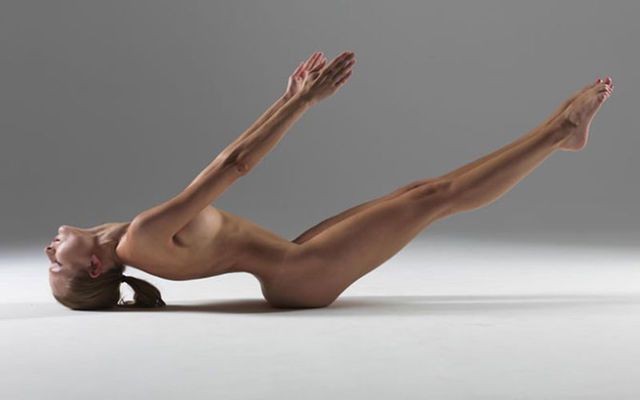
The human body has not changed dramatically over the past several thousand years, but the conditions of daily life have. Many adults spend most of the day sitting, looking down at phones, working at computers, commuting, and moving through a narrow range of repeated positions.
Long periods of inactivity may be combined with chronic stress, interrupted sleep, limited recovery, and short bursts of intense exercise intended to compensate for the rest of the week. Traditional fitness often responds by encouraging people to push harder, add more intensity, and measure more outcomes.
Intensity has a place, but the modern body also needs mobility, coordination, balance, recovery, breathing, strength through useful ranges of motion, and movement that can be sustained over time. A person who sits at a desk all day may need spinal mobility and hip strength as much as another high-intensity workout.
The body also changes with pregnancy, menopause, injury, illness, aging, work, stress, and changes in activity. A movement practice should be able to evolve with those realities rather than treating one routine as the permanent answer.
The modern body does not need one perfect method. It needs a range of intelligent tools.
What Intelligent Movement Means
Intelligent movement begins with the understanding that exercise should respond to the person rather than forcing every person into the same system. It considers physical history, current ability, stress, recovery, goals, and the way the body is being used outside the workout.
At Naked Fit Club, yoga, Pilates, barre, strength, mobility, meditation, breathwork, and fascia-focused techniques are treated as tools rather than competing identities. Each can offer something valuable, but no single method has every answer for every body.
Strength
Strength supports posture, bone health, balance, physical independence, everyday activity, and the ability to tolerate greater demands. It should be developed progressively and with enough control that the body can adapt.
Mobility and Stability
Mobility allows the body to move through useful ranges, while stability helps control those ranges. Flexibility without control is not always useful, and strength without mobility can leave movement limited.
Balance and Coordination
Balance and coordination affect confidence, injury prevention, athletic movement, and healthy aging. These qualities can be trained through yoga, barre, Pilates, functional exercise, and dance.
Breathing and Awareness
Breathing influences movement, tension, attention, and the ability to manage effort. Breathwork and mindful movement can help people notice patterns they may otherwise overlook.
Recovery
Recovery is not an interruption of fitness. It is one of the conditions that allows fitness to improve. Rest, sleep, mobility, gentle movement, stretching, and stress-management practices all contribute to a complete program.
Enjoyment
Enjoyment is frequently underestimated because it cannot be measured as easily as repetitions, calories, or weight. It still matters. People are more likely to repeat movement they find rewarding, and consistency is what allows most physical benefits to develop.
Body Confidence and Body Awareness
Body confidence is one of the most common reasons people become interested in naked fitness, but confidence rarely arrives all at once. It often develops through repeated experiences of moving, breathing, balancing, and seeing the body function without needing to conceal every perceived imperfection.
Someone may begin by focusing almost entirely on appearance. Over time, attention can broaden to include strength, posture, flexibility, balance, comfort, energy, and the ability to complete movements that once felt difficult.
This does not require loving every part of the body. A person can have appearance goals, notice changes they would like to make, and still develop a healthier relationship with the body they have now.
Body awareness is equally important. Naked movement may make alignment and muscle engagement easier to observe, but useful awareness also involves learning to interpret physical signals. The person begins to notice fatigue, tension, stability, range of motion, and the difference between productive effort and pain.
For many people, the long-term goal is not simply becoming less self-conscious. It is learning to feel good naked by developing comfort, familiarity, confidence, physical capability, and a less judgmental relationship with the body.
Confidence becomes more durable when it grows from experience, capability, and familiarity rather than appearance alone.
Sexual Wellbeing Belongs in the Conversation
Fitness is comfortable discussing heart health, mental health, weight, sleep, and longevity. Sexual wellbeing is often separated from the rest of wellness, even though it can be influenced by physical health, energy, stress, mobility, confidence, body image, hormones, medication, pain, and relationships.
Naked fitness does not need to be sexual during the workout. Many people value it precisely because it allows them to experience nudity in a nonsexual setting focused on breathing, movement, balance, strength, and relaxation.
At the same time, there is no reason to pretend sexuality is irrelevant. People may be drawn to naked fitness because they want to feel more attractive, more confident with a partner, more physically present during intimacy, or more connected to their own desire and vitality.
These are legitimate wellness goals. Regular movement may support energy, cardiovascular health, mobility, stamina, stress management, and confidence, all of which can influence sexual wellbeing. Naked fitness is not a treatment for sexual dysfunction, pain, trauma, hormonal concerns, or relationship problems, and persistent concerns may require appropriate professional support.
The larger point is that people are allowed to care about strength, longevity, pleasure, intimacy, and feeling desirable at the same time.
Why Vitality Matters
Vitality describes something broader than physical fitness. It includes energy, resilience, curiosity, desire, creativity, playfulness, and the sense that the body is participating fully in life.
People rarely exercise only because they want better numbers on a health report. They want enough energy to travel, work, create, dance, have sex, care for their families, recover from stress, and remain active as they age.
A person can look fit and still feel depleted. Another may not match a narrow fitness ideal but feel strong, expressive, sexually alive, and deeply involved in life. Appearance can matter, but it is only one part of the experience.
Naked Fit Club treats vitality as a meaningful outcome because it connects movement to the life someone wants to live. The goal is not to exhaust the body into looking healthy. It is to build a body with enough strength, mobility, energy, and resilience to support a rich life.
The Four Pillars of Naked Fit Club
Move Better
Build strength, mobility, balance, coordination, flexibility, and physical awareness through movement that supports both exercise and everyday life.
Feel Better
Use movement, breathing, mindfulness, and recovery to support physical comfort, stress management, body awareness, and a healthier relationship with exercise.
Live Better
Support resilience, energy, healthy aging, sleep, recovery, physical independence, and the ability to remain involved in the activities and relationships that matter.
Feel Good Naked
Develop greater comfort with your body, confidence, vitality, sexual wellbeing, and the freedom to participate in life without waiting for physical perfection.
What Makes Naked Fit Club Different
Many fitness platforms are organized around one modality. Some teach yoga, others specialize in Pilates, strength training, meditation, or weight loss. Naked Fit Club brings different disciplines together through a shared philosophy.
The approach developed through Jean V’s work at Maiden Lane Studios in San Francisco, where clients included professionals, parents, athletes, executives, pregnant clients, and people returning from injury or inactivity. The studio’s work was recommended by Vogue and Goop, but its most meaningful authority came from years of working directly with real people whose bodies, schedules, goals, and challenges did not fit into one template.
That experience reinforced a simple principle: the best movement method is the one that addresses what the person actually needs. Sometimes the answer is strength and challenge. At other times, it is mobility, balance, breathing, recovery, or a short practice that makes consistency possible.
Naked Fit Club also makes room for subjects that conventional fitness often avoids. Confidence, pleasure, sexuality, aging, creativity, and feeling attractive are treated as part of wellness rather than distractions from it.
The Question Behind Every Practice
Instead of asking which workout is universally best, we begin with a more useful question:
What does your body need today?
The answer will not remain the same throughout life. Intelligent movement allows the practice to change without treating adaptation as failure.
Who Naked Fitness Is For
Naked fitness can appeal to adults with many different bodies, motivations, and levels of experience. It is not reserved for people who are already confident, conventionally fit, young, flexible, or comfortable being seen without clothing.
It may be especially meaningful for people who:
- Want a more private and personal home practice
- Feel uncomfortable in public gyms
- Want to improve body confidence
- Are curious about clothing-optional movement
- Want to feel more comfortable with intimacy
- Are returning to fitness after a break
- Are navigating pregnancy, menopause, aging, or physical change
- Need greater mobility, balance, strength, or recovery
- Want exercise to feel more enjoyable and less performative
- Are interested in mindfulness, breathwork, and body awareness
The practice will not appeal to everyone, and it does not need to. Clothing-optional movement should remain voluntary, private, and adaptable to personal boundaries.
How to Begin
You do not need special equipment or a complete workout plan. A first naked fitness session can be five to fifteen minutes in a private room with a clean mat or towel.
For a more detailed introduction, start with our guide to naked fitness for beginners. If practicing privately is especially important to you, our guide to naked fitness at home covers privacy, comfort, space, preparation, and building a sustainable home practice.
Begin with movement you already understand, such as gentle stretching, mobility, breathing, basic Pilates, slow yoga, supported barre, or dancing to one or two songs. If yoga feels like a natural place to start, our guide to naked yoga explains the practice, its potential benefits, beginner poses, and how to practice privately at home, while our naked yoga for beginners guide offers a more focused introduction for first-time practitioners.
Wear as much or as little clothing as feels comfortable, and keep a robe or towel nearby.
Protect your privacy by closing blinds, checking sightlines, and turning off unnecessary cameras or connected devices. If you follow an online class, review the provider’s privacy and recording policies before appearing on camera.
Your first experience does not need to feel transformational. It may feel comfortable, awkward, playful, vulnerable, neutral, or surprising. The purpose is to gather information and decide whether you want to continue.
A Simple First Practice
- Choose a private space.
- Set the room to a comfortable temperature.
- Place a clean mat or towel on the floor.
- Wear as much or as little clothing as you prefer.
- Spend one minute breathing and noticing how you feel.
- Complete five to ten minutes of familiar movement.
- Finish with a short rest or stretch.
- Notice whether the experience gave you something worth repeating.
Jean V’s Perspective
After years of working with clients, I learned that people rarely need another reason to criticize their bodies. They need better information, appropriate movement, and enough support to build confidence through experience.
Many people arrived at Maiden Lane Studios with a physical goal, such as a stronger core, less pain, better posture, or greater flexibility. As they continued, the goals often expanded. They wanted more energy, better sleep, confidence, physical comfort, and a body that felt good to live in.
Naked Fit Club grew from that understanding. Removing clothing is only one part of the practice. The larger purpose is to help people move intelligently, become more familiar with themselves, and stop postponing confidence, pleasure, and participation until the body reaches some imagined point of perfection.
You can care about how you look and still value strength, health, sexuality, creativity, and long-term wellbeing. You can want to improve while also allowing yourself to enjoy the body you have today.
Jean V
Founder, Naked Fit Club and Maiden Lane Studios
This Is an Invitation
You do not need to become more flexible before beginning. You do not need to lose weight, eliminate every insecurity, or convince yourself that you love every part of your body.
You only need enough curiosity to explore movement from a different perspective. Begin clothed, partially clothed, or fully naked. Practice for five minutes or complete a longer class. Choose yoga, Pilates, barre, mobility, strength, dance, meditation, or any combination that helps you feel more connected and capable.
Movement has always been one of the ways people return to themselves. Naked fitness simply creates another opportunity to experience the body without as many layers of expectation, comparison, and performance.
The body does not need to become a finished project before it can be used, appreciated, strengthened, or enjoyed.
Explore Naked Fit Club
Naked Fit Club offers clothing-optional yoga, Pilates, barre, mobility, stretching, dance-inspired movement, breathwork, meditation, functional strength, and holistic wellness practices designed for private use at home.
RECENT NAKED FITNESS ARTICLES
Benefits of Naked Yoga: Body Awareness, Confidence & Mindfulness
Explore the benefits of nude yoga, including body awareness, confidence, mindfulness, freedom of movement, sensuality, and relaxation.
Nude Yoga for Beginners: How to Start Safely at Home
Learn how to start nude yoga at home with simple beginner poses, mindful movement, body awareness, confidence, and practical tips for your first practice.

Feel Good Naked: Confidence, Strength, Sexual Wellbeing & Vitality
Feel good naked through strength, energy, confidence, sexual wellbeing, physical comfort, self-respect, and a healthier connection with your body.
The Psychology of Naked Fitness: Confidence, Body Image & Wellness
Explore how naked fitness can support body image, confidence, mindfulness, sexuality, playfulness, and a more comfortable relationship with your body.

Naked Fitness at Home: Safe, Private & Beginner-Friendly
Learn how to practice naked fitness at home with confidence, privacy, mindful movement, and simple wellness routines you'll actually want to maintain.
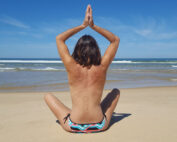
Naked Fitness for Beginners – How to Start Safely and Comfortably
Learn how to start naked fitness with confidence. Discover beginner tips for body awareness, mindfulness, movement, and self-acceptance.

Frequently Asked Questions About Naked Fitness
What is naked fitness?
Naked fitness is exercise practiced without clothing or with less clothing than usual. It may include yoga, Pilates, barre, mobility, strength training, stretching, dance, breathwork, meditation, and recovery practices.
Is naked fitness one specific type of workout?
No. Naked fitness is a clothing-optional approach that can be applied to many forms of exercise. The workout should be selected according to the person’s health, experience, goals, and current needs.
Why do people practice naked fitness?
People may practice for physical comfort, body confidence, mindfulness, curiosity, greater body awareness, sexual wellbeing, stress relief, playfulness, or a more personal relationship with movement.
Is naked fitness sexual?
Naked fitness can be practiced as a professional, nonsexual wellness activity focused on movement, privacy, consent, and health. It may still support sexual wellbeing and confidence because sexuality is connected to the broader experience of living in a body.
Do I need to be fully naked?
No. You can remain clothed, practice in underwear, remove one layer, or exercise fully naked. Clothing-optional fitness should allow you to choose your own level of coverage.
Do I need a certain body type?
No. Naked fitness is not limited to people who are thin, young, athletic, flexible, muscular, or already confident. Movement should be adapted for current ability, health, and experience.
Do I need to be confident before beginning?
No. Many people begin because they want to develop greater confidence and body familiarity. Confidence often grows through manageable and repeated experience.
Can naked fitness improve body confidence?
Some people find that private clothing-optional movement helps them become more familiar with their bodies and less controlled by perceived imperfections. Confidence may also grow through strength, mobility, balance, and physical capability.
Does naked fitness have special physical benefits?
The physical benefits come primarily from the quality and consistency of the exercise rather than nudity itself. Practicing without clothing may influence comfort, awareness, confidence, and the emotional experience of movement.
Can naked fitness improve body awareness?
It may make posture, alignment, breathing, muscle engagement, skin sensation, and movement patterns easier to observe. Useful body awareness also depends on instruction, attention, and experience.
Can naked fitness help with stress?
Movement, breathing, stretching, meditation, and restorative practices may support relaxation and stress management. Naked fitness is not a treatment for anxiety disorders or other mental-health conditions.
Can naked fitness improve sexual wellbeing?
It may support body familiarity, confidence, mobility, energy, stress management, and comfort with intimacy. It is not a treatment for sexual dysfunction, pain, trauma, hormonal concerns, or relationship problems.
Is naked fitness safe?
It can be safe when the movements are appropriate, the space is clean and private, and normal exercise precautions are followed. Stop for sharp pain, dizziness, numbness, or unusual discomfort.
Is naked fitness hygienic?
Yes, when you use a clean personal mat or towel, manage sweat, clean equipment, and avoid direct contact with shared surfaces.
Can I practice naked fitness at home?
Yes. Home is often the most practical place to begin because it provides control over privacy, temperature, lighting, mirrors, clothing, and the length of the session.
What exercises work well for naked fitness?
Yoga, Pilates, barre, mobility, stretching, bodyweight strength, dance, breathwork, meditation, and restorative movement can all work well without clothing when taught and practiced appropriately.
Can beginners try naked fitness?
Yes. Beginners can start with five to fifteen minutes of breathing, stretching, mobility, gentle yoga, basic Pilates, supported barre, or simple strength exercises.
Can older adults practice naked fitness?
Yes. Older adults may benefit from appropriately selected strength, balance, mobility, flexibility, breathing, and mindfulness practices. Exercise should be adapted for health, injuries, medications, and experience.
Can pregnant people practice naked fitness?
Some pregnant people may continue appropriately modified exercise with clearance from their healthcare provider. Qualified prenatal instruction is important because pregnancy changes balance, temperature regulation, joint stability, and exercise tolerance.
What makes Naked Fit Club different?
Naked Fit Club combines clothing-optional movement with the integrated approach developed at Maiden Lane Studios. Classes may draw from yoga, Pilates, barre, mobility, functional strength, fascia-focused techniques, breathwork, meditation, and recovery.
Where can I find Naked Fit Club classes?
Naked Fit Club offers clothing-optional movement and holistic wellness programs at nakedfitclub.vhx.tv.